
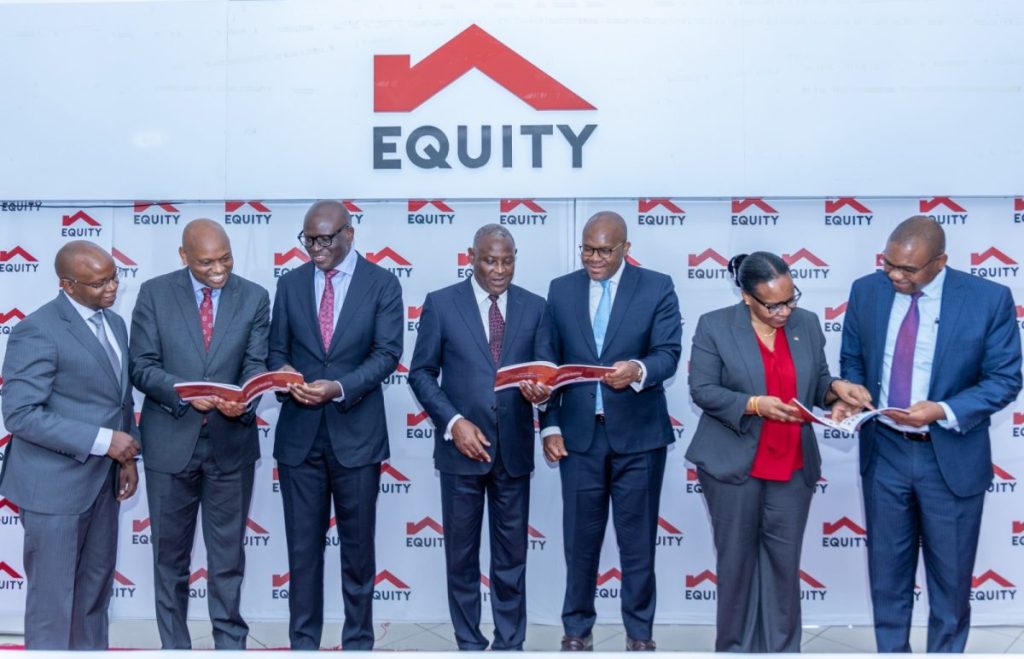
Equity Group Holdings Plc has announced its Q3 2025 results, showcasing a robust performance driven by strategic transformation and resilience. The Group’s Profit After Tax surged 32% to Kshs 54.1 billion up from Kshs 40.9 billion, underpinned by diversified and growing revenue streams, enhanced efficiency, and strong regional contributions and strong recovery of the Kenya banking business.
- Advertisement -
During the quarter, the global environment demonstrated resilience with slightly stronger economic growth expected for the year. Easing global inflation rates has been helpful in an international landscape increasingly shaped by trade tensions and fragmentation. Most East African economies will retain the benefits of lower global oil prices which usefully combine with high prices in export commodities such as gold, copper, and coffee. Africa stands out as one of the most resilient regions, with nine of the top twenty fastest growing economies in the world for 2025 from the continent.
In East Africa, Rwanda and Uganda are global growth leaders with regional economic momentum supported by Tanzania and Kenya especially. Inflation trends generally support stability with low inflation in Kenya, Uganda, Tanzania, and substantial easing in the DRC. While the region still stands to be comparatively better off regarding new trade tariffs, the end of the Africa Growth and Opportunity Act presents a mixed bag that will need to be monitored.
The Group has developed and mapped its 2030 strategic plan to anchor the Africa Recovery and Resilience Plan (ARRP), with an ambition to have a presence in 15 countries and serve a hundred million customers by 2030. This ambition has necessitated the evolution of the core pillars, key enablers, and critical success factors. Governance and leadership continue to strengthen, focusing on capacity, competence, transparency, and experience. Systems and infrastructure have been fully replaced with scalable, next-generation, Fourth Industrial Revolution technologies that are digital, machine learning–enabled, and based on Generative Artificial Intelligence (GAI), with data analytics at the center of the Group’s strategy. Applications that leverage the capabilities of these systems and infrastructure, with inbuilt enhanced security and innovations, are being deployed. A go-to-market strategy has been developed for the roll-out of these transformational capabilities, delivered by a modern product house to enhance customer value propositions and solutions.
This allows the Group to serve a more diverse and segmented member market on the basis of industries, sectors, demographics, and customer-specific status. The Group’s organizational culture is undergoing transformation to embed customer centricity and market responsiveness as core values, integrity, professionalism, creativity, innovation, and teamwork, fostering a fit-for-purpose human capital corps and attracting and retaining talented, skilled, and experienced staff.
Anchored in the ARRP and its Tri-Engine Business Model, the Group is demonstrating how financial institutions can catalyze inclusive and sustainable growth by aligning private capital with national and regional development priorities. Through blended finance, strategic partnerships, and ecosystem-building across key value chains, the Group is crowding in private investment to complement public efforts, strengthen resilience, and unlock enterprise-driven transformation. This approach positions Equity Group not merely as a bank, but as an integrated Transformation Finance Institution, bridging philanthropy, development finance, and commercial capital to deliver sustainable prosperity across Africa.
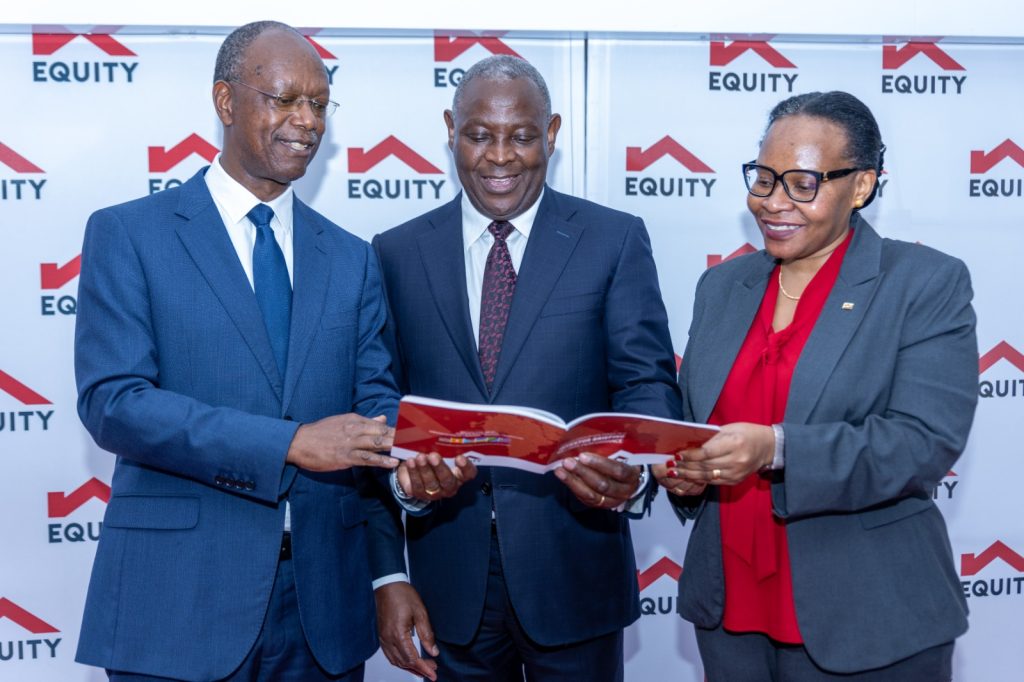
Commenting on the third quarter 2025 performance, Equity Group Managing Director and CEO, Dr. James Mwangi said, “The execution of the strategic business plan has started to reflect on the balance sheet and performance of the Group in agriculture, mining, manufacturing, trade and investment, and small and medium enterprises (SMEs) that populate the eco-systems of the formal sector in these value chains and is likely to significantly and increasingly transform the structure and performance of the Group.”
Equity Group’s Q3 2025 performance was marked by a 32% year-on-year increase in Profit After Tax, reaching Kshs 54.1 billion up from Kshs 40.9 billion, alongside strong profitability ratios with Return on Average Equity (RoAE) at 26.4% and Return on Average Assets (RoAA) at 4.1%. The Group demonstrated effective revenue diversification, as evidenced by a 16% growth in net interest income and 3% growth in non-funded income. The Group also achieved improved efficiency, with the cost-to-income ratio significantly reduced to 50.6% from 55.1%, while strong asset quality was maintained through an increase in non-performing loans (NPL) coverage to 71.4% and a contained cost of risk at 1.9%.
“Our Q3 2025 performance reflects the strength of our diversified tri-engine business model, operational efficiency, and continued commitment to transforming lives,” said Dr. James Mwangi, Equity Group Managing Director and CEO. “By empowering MSMEs, leveraging digital platforms, and aligning with Africa’s socio-economic and sustainability priorities, we continue to drive inclusive growth and create shared prosperity. We are particularly proud of our regional subsidiaries, which have demonstrated resilience and contributed significantly to our overall performance.”
In Kenya, Equity Bank reported a strong performance with Profit after Tax rising by 51% to Kshs. 31.1 billion up from Kshs. 20.6 billion in the previous period. Net interest income grew by 27% to Kshs. 53.6 billion from Kshs. 42.0 billion, supported by a 34% decline in interest expenses, which reduced to Kshs. 25.1 billion from Kshs. 38.0 billion. Consequently, total equity expanded by 36% to Kshs. 171.4 billion up from Kshs. 126.1 billion. Equity Bank Kenya sustained its MSME banking leadership, disbursing 45% of the Kshs 201 billion MSME loans in Kenya between January and July 2025, and the Equity Insurance Group reported a 71% increase in gross written premiums, contributing to a 36% growth in profit before tax. Regional subsidiaries also made significant contributions, with Equity BCDC (DRC) recording 19% YoY l oan growth and Equity Bank Rwanda achieving 34% YoY loan growth. The strong growth of the region provides a long-term runway and headways for sustained growth of the Group.
“We appreciate our customers for their continued support and patience throughout our transformation journey, despite the challenges experienced during the period,” said Dr. James Mwangi, Equity Group Managing Director and CEO. “This transformation marks our evolution into a one-stop financial services provider, offering borrowing, investing, insurance, payments, and savings solutions seamlessly, 24 hours a day. With system stability now fully restored, we are focused on expanding our product offerings to better serve our customers and enhance their opportunities for wealth creation. Importantly, this transformation has not changed our true north, our unwavering commitment to supporting micro, small, and medium enterprises. We are proud that industry data shows Equity is home to 45% of all SME loans disbursed this year. We remain dedicated to exploring greater opportunities to make this our core focus.”
Regional diversification continues to transform Equity Group from a Kenyan bank to a regional powerhouse, with 50% of deposits, 53% of the loan book, 50% of total banking assets, and 49% of Group banking revenue originating from regional subsidiaries. This regional banking business has been value creating, contributing 45% of Profit before Tax and 42% of Profit after Tax of the banking business.
In the DRC, Profit after Tax increased by 21% to Kshs. 13.8 billion up from Kshs. 11.4 billion. Loans and advances grew by 19% to Kshs. 302.7 billion, up from Kshs. 253.5 billion, funded by a corresponding decline in cash holdings from Kshs. 275 billion Kshs. 259.3 billion. Total equity rose by 28% to Kshs. 88.8 billion, up from Kshs. 69.4 billion.
In Uganda, Profit after Tax recorded a significant 61% increase to Kshs. 2.9 billion, up from Kshs. 1.8 billion. Investment securities grew by 23% to Kshs. 39.6 billion from Kshs. 32.1 billion, while total equity rose by 23% to Kshs. 18.5 billion, compared to Kshs. 15.8 billion previously.
In Rwanda, total assets expanded by 5% to Kshs. 122.9 billion, up from Kshs. 116.6 billion, driven by a 34% growth in the loan book, which increased to Kshs. 62.3 billion up from Kshs. 46.4 billion. Total equity also recorded an 18% increase to Kshs. 19.6 billion, up from Kshs. 16.6 billion.