

For years, the intersection of economic survival and ecological preservation in Uganda has been framed as an unavoidable conflict. For a smallholder family to put food on the table or pay school fees, a hillside often had to be cleared for fuel or agriculture.
- Advertisement -
Today, as the world marks World Environment Day under the theme “Inspired by Nature: For Climate. For Our Future,” the spotlight is on global climate action, sustainability, and environmental awareness. This celebration comes at a time when a fundamental shift in environmental economics is challenging old narratives, proving that rural communities can achieve greater financial security by keeping trees standing rather than cutting them down.
Our changing climate makes this shift incredibly urgent. Across Uganda’s biodiversity-rich landscapes, including; the Mount Elgon landscape in the East and the Queen Elizabeth and Murchison-Semliki landscapes in the South-Western Albertine Rift communities are increasingly facing severe, climate-related and human-driven environmental degradation.
Land degradation has left these biodiversity hotspots highly vulnerable to intense floods, catastrophic mudslides, and unpredictable rainy seasons that trigger frequent, unexpected droughts- threatening livelihoods, food security, and ecosystem health. In response to this compounding crisis, the Environmental Conservation Trust of Uganda (ECOTRUST) has deployed a performance-based conservation finance model designed to transform land restoration into a viable, community-led business enterprise in these regions for 27 years now.
At the core of this strategy is the Trees for Global Benefits (TGB) initiative. Operating under the global Plan Vivo standard, the program incentivizes rural smallholders toto invest in tree growing as a viable commercial venture, integrating indigenous tree species into their farming systems while generating long-term environmental and financial returns- to invest in tree growing as a viable commercial venture, integrating indigenous tree species into their farming systems while generating long-term environmental and financial returns.
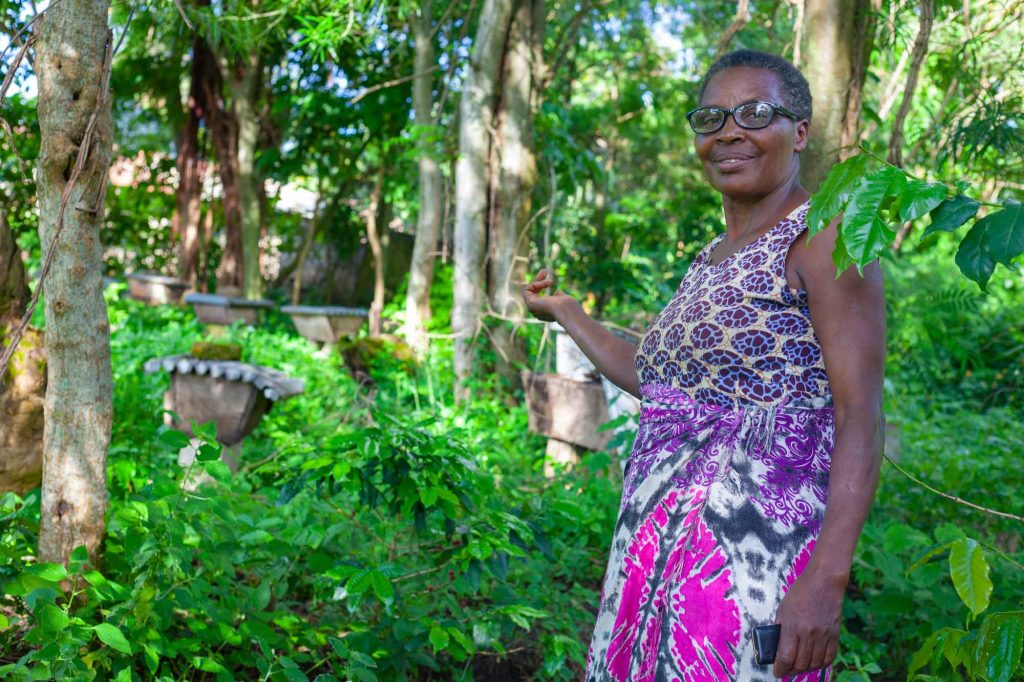
The living proof of this model’s longevity can be found in the story of Betty Masamba Kalema, a farmer who joined ECOTRUST’s Trees for Global Benefits (TGB) project back in 2003 after being introduced to it by Wilson Turyahikayo. Intrigued by the idea that trees could benefit her both environmentally and financially, Betty integrated the seedlings she received directly into her coffee plantation.
Over the next two decades, those trees grew into a profound source of stability. The resulting carbon payments allowed her to cover household expenses, pay her children’s school fees, and even extend a helping hand to orphans within her community.
For pioneers like Betty, the impact extends far beyond financial metrics. During the blistering heat of the dry seasons, the canopy provides a sanctuary of cool comfort and peace. Practically, the trees have fueled her home through sustainable firewood collection, with the surplus sold to neighbors for extra income.