

Dei BioPharma Limited has accused unnamed international interests of attempting to undermine Uganda’s pharmaceutical industry, claiming they blocked a planned US$430 million funding package and orchestrated a smear campaign against its Shs723 billion government investment.
- Advertisement -
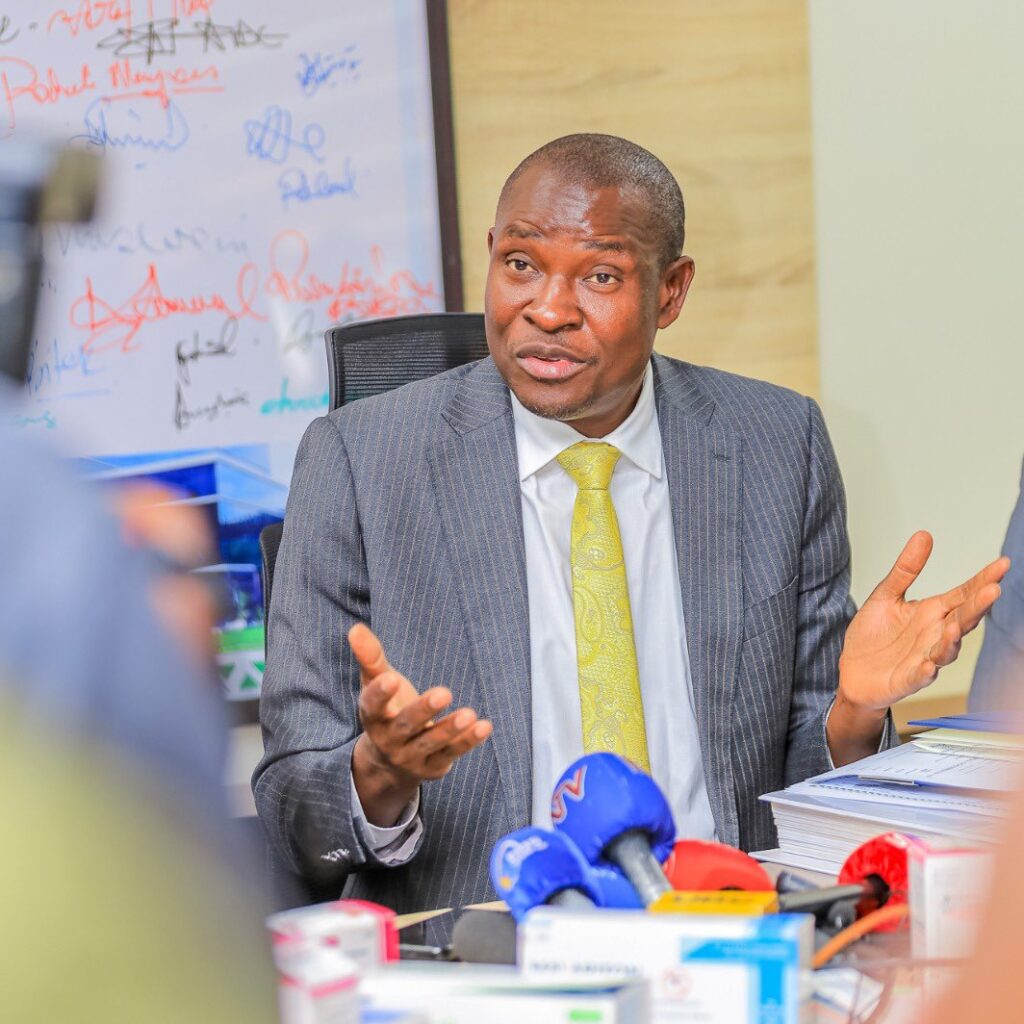
The company’s Managing Director, Dr. Mathias Magoola, made the allegations while addressing journalists at the pharmaceutical plant in Matugga on Monday, responding to claims by Leader of the Opposition Joel Ssenyonyi that the government had acquired nothing in the company despite investing public funds.
Magoola said the attacks were intended to frustrate Uganda’s efforts to manufacture specialised medicines and vaccines locally, rather than concerns about accountability.
“There are international mafias fighting us. They blocked our funding of 430 million US dollars because they do not want Uganda to manufacture its own drugs. When they failed to kill the project financially, they started fighting us with lies,” Magoola said.
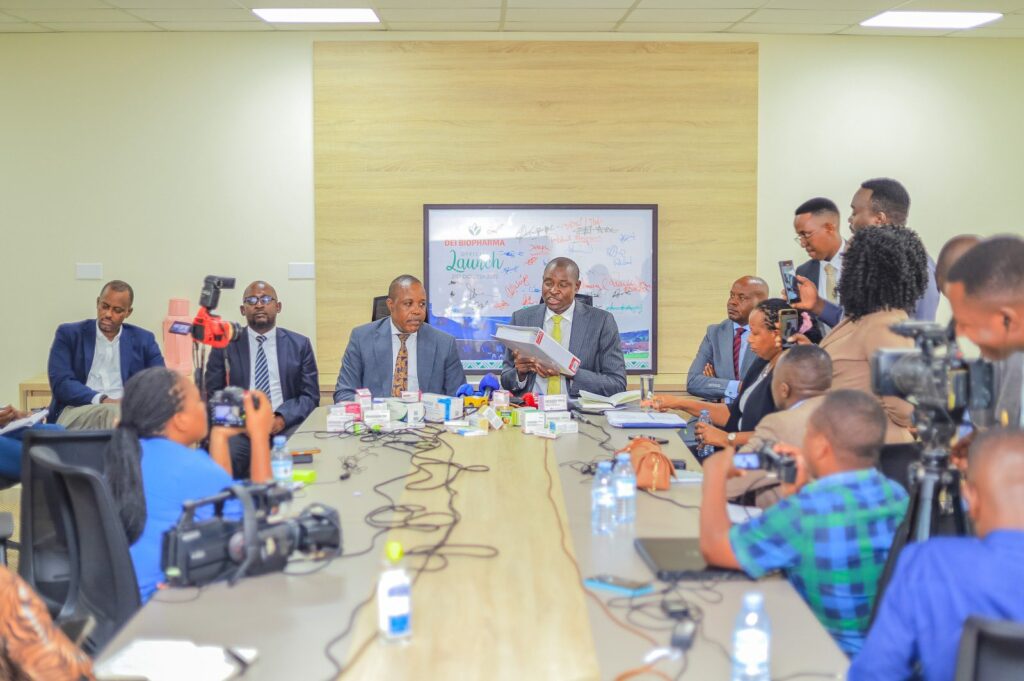
He alleged that the groups were working through local agents to spread misinformation that the company had no valuation, share certificates or pharmaceutical products. Magoola said the company was surprised by Ssenyonyi’s November 10, 2026, statements in Parliament because the legislator had previously visited the facility, where he was taken through its documents and shown its products.
During the parliamentary session, Ssenyonyi questioned the government’s investments in Dei BioPharma, Atiak Sugar, Roko Construction and Inspire Africa Coffee, arguing that there was insufficient evidence of clear agreements, valuations and what the State had acquired. In the case of Dei BioPharma, he questioned the absence of a valuation report and share certificates, and warned that taxpayers risk losing their money amid reports that the company’s property was being advertised for auction. He also questioned whether the facility was manufacturing specialised medicines.
Ssenyonyi called for an audit of the investments and urged the government to suspend further funding until the companies account for previous allocations. However, Dei BioPharma Board Chairperson Dr. Patrick Wakida, who said he signed the agreement between the government and the company, dismissed the claims.

Wakida said the government’s Chief Government Valuer assessed the facility, including its intellectual property, at US$2.1 billion. He said the government’s Shs723 billion investment represented a 9.4 percent stake in the company. He maintained that the valuation report was available and that Parliament had already received a copy.
The Matugga facility currently employs about 500 people and is projected to support around 40,000 jobs once fully operational, as local manufacturing expands to cut Africa’s heavy reliance on imported medicines and treatments.
On the question of share certificates, Magoola said the government holds two certificates through the Ministry of Finance and the Ministry of Science, Technology and Innovation. He said the certificates could be verified through the Uganda Registration Services Bureau.
Addressing concerns about production, Magoola said the company currently has 14 products on the market, including Hydroxyurea, used in the management of sickle cell disease, Tranexamic Acid, used to control bleeding, including postpartum haemorrhage, and several World Health Organisation-recommended anti-malarial medicines. He argued that some of the products, which he said meet international standards, are manufactured locally at the Matugga facility.
Magoola also responded to concerns raised in Parliament over Equity Bank advertisements relating to the company’s property, saying the dispute with the lender was about interest calculations rather than the company’s failure to repay its loans. He said Dei BioPharma had obtained 22 loans from Equity Bank over a period of 12 years, amounting to more than US$150 million, and had repaid 21 of them, leaving one loan under dispute.
According to Magoola, the company’s auditors established that the bank had charged interest at 24 percent instead of the agreed 16 percent, resulting in an alleged overpayment of Shs137 billion. He said the matter was before court, which had halted any action by the bank pending reconciliation of the accounts.
Magoola added that the company paid Shs180 billion in 2024 and that the outstanding balance needed to be established before the loan could be closed. He further said the facility holds more than 100 patents covering products and research related to COVID-19, Ebola, Marburg, Zika and malaria vaccines. The company currently employs close to 500 people, Magoola said, adding that the workforce could grow to nearly 40,000 when the facility becomes fully operational.
He urged Ssenyonyi to revisit the plant and independently verify its equipment, products and documents. “When people hear the lie many times, a number of them take it to be the truth. We invite Ssenyonyi to return to the facility and verify the equipment, products and documents for himself,” he said.
Dei BioPharma was established to manufacture vaccines, specialised medicines and other pharmaceutical products, with the aim of reducing Africa’s dependence on imported drugs and addressing the circulation of counterfeit medicines.
The Matugga facility is still undergoing expansion and is projected to cost US$1.1 billion when completed. The government invested Shs723 billion in the company in exchange for a 9.4 percent stake.
