

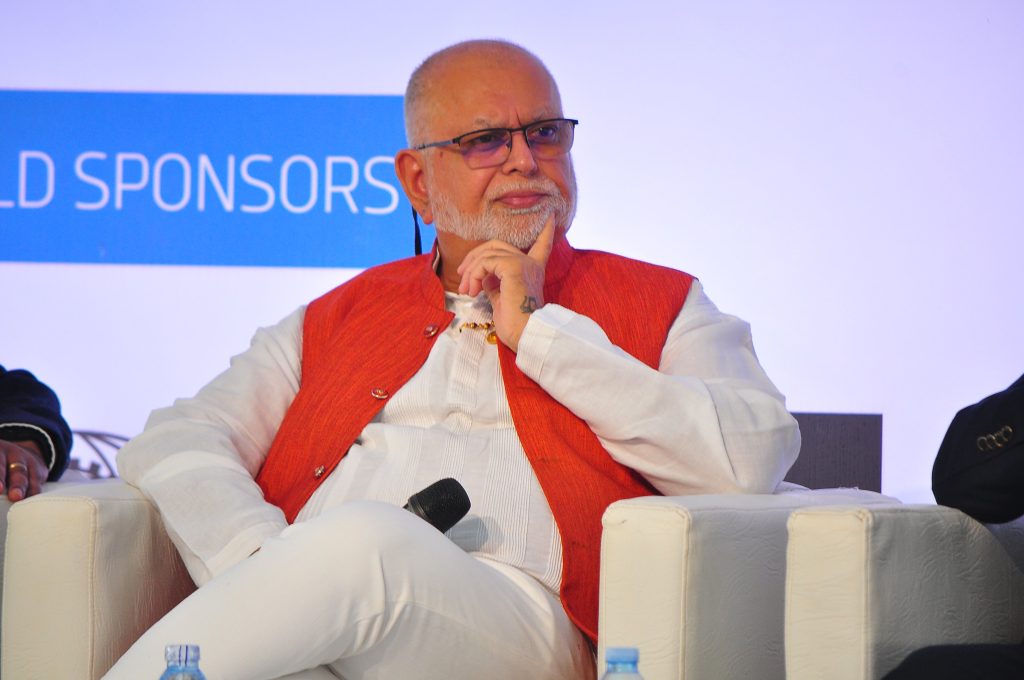
Sudhir Ruparelia, the founder of the Ruparelia Group has built a remarkable empire, lived through exile, and bounced back from setbacks with the kind of resilience most entrepreneurs only dream of.
- Advertisement -
It’s about survival, risk-taking, and the willingness to see opportunity where others only saw chaos.
And in a continent where entrepreneurship is often about both resilience and reinvention, his journey offers lessons far beyond Uganda’s borders.
Sudhir was born in 1956 in Uganda, at a time when the country was still finding its post-colonial identity.
His family was part of the South Asian community that had made East Africa home for generations. They ran small businesses and contributed significantly to trade and commerce.
In 1972, Uganda’s dictator Idi Amin ordered the expulsion of Asians from the country, accusing them of “sabotaging the economy.”
Expulsion of Asians from Uganda. Most of them went to the U.K. and others settled in Kenya, Tanzania, United States and India.
In a matter of days, more than 70,000 families lost everything they had built.
Sudhir’s family was among them. He was only a teenager when he found himself uprooted and sent to the United Kingdom.
Life in the UK wasn’t easy. He did odd jobs — from working in factories to waiting tables — just to survive.
But in those struggles, a seed was planted: the realization that money wasn’t just about earning; it was about multiplying.
He learned discipline, the value of every pound, and the importance of spotting opportunities where others didn’t bother to look.
This period shaped him deeply. While many exiled families chose to stay in the UK permanently, Sudhir’s eyes were always on Uganda.
When political winds shifted and stability started returning in the 1980s, he made a decision that would change everything: returning home.
To appreciate Sudhir’s decision, you need to picture Uganda in the mid-1980s. The country had been through coups, economic collapse, and civil wars.
Businesses were destroyed. Infrastructure was broken. Investors stayed far away.
It was the kind of environment where most people thought, “stay away until things settle.”
But to a sharp-eyed entrepreneur, it was exactly the opposite. Sudhir saw a blank canvas. A nation eager to rebuild. A market with gaps everywhere.
And so, in 1985, with just $25,000 in savings, he returned.
That amount may sound small today, but back then, it was his ticket to start building something bigger than survival — an empire.
His first venture was in foreign exchange trading.
At the time, Uganda had a scarcity of formal forex services, but a growing demand for currency exchange. People needed trusted intermediaries.
Sudhir opened Crane Forex Bureau, one of the first privately owned forex bureaus in the country. It was a simple model but highly profitable.
And more importantly, it gave him insight into how money moved in and out of Uganda.
This small but steady business gave Sudhir the capital, networks, and confidence to expand into bigger ventures. The forex bureau was the seed that eventually sprouted into the Ruparelia Group.
From the late 1980s onward, Sudhir expanded aggressively. He didn’t put all his eggs in one basket.
Instead, he spread across industries — finance, real estate, hospitality, education, agriculture. Each move was strategic, tied to Uganda’s growth story.
Sudhir’s big move into finance came with the creation of Crane Bank in 1995.
Over time, it grew into one of the largest privately owned banks in Uganda, serving millions of customers.
Crane Bank wasn’t just a business; it became a symbol of local entrepreneurship challenging foreign-owned financial institutions.
At its peak, it was worth hundreds of millions of dollars.

But the story wasn’t without setbacks. In 2016, the bank faced liquidity problems and was eventually taken over by the Bank of Uganda.
The sale to DFCU Bank became one of the biggest financial sagas in East Africa. Critics said it was a blow to Sudhir’s empire; supporters saw it as a political and regulatory storm.
Here’s the important part: he didn’t disappear. Unlike many who collapse under controversy, Sudhir bounced back by strengthening his other businesses.
If you walk through Kampala today, chances are you’ll see Sudhir’s imprint on the skyline. His company owns dozens of prime properties — from Crane Chambers to Kingdom Kampala Mall.
One of his crown jewels is Speke Resort Munyonyo, a luxury lakeside resort that has hosted world leaders and international conferences. It’s not just a hotel; it’s part of Uganda’s national brand.
Through real estate, Sudhir combined personal wealth creation with national development. His investments modernized Kampala’s infrastructure while creating jobs and tax revenue.
Sudhir understood early that Uganda needed world-class hospitality to attract tourists and investors.
Under the Ruparelia Group, he built a portfolio that includes Kabira Country Club, Forest Cottages, and multiple casinos.
These establishments didn’t just serve elites; they raised the bar for the entire hospitality industry in Uganda.
Today, events, weddings, conferences, and leisure activities often take place in Sudhir-owned venues.
For someone who was forced to leave school abruptly due to exile, education became a cause close to his heart.
Through the Ruparelia Group, he invested heavily in private education:
Kampala Parents School
Kampala International School Uganda (KISU)
Victoria University
Victoria University Opens Applications for July 2025 Intake – Daily Star
These institutions cater to thousands of students, from local families to expatriates, and represent some of the best educational options in the country.
Sudhir often says that “education is the most powerful equalizer.” His investments prove he puts money where his heart is.
Few know that Sudhir is also one of Uganda’s leading exporters of roses. His floriculture farms supply Europe with high-quality flowers, earning foreign exchange for the country and creating rural jobs.
This is classic Sudhir: diversify, spot niches, and never underestimate industries others overlook.
Relationships are another cornerstone of his leadership. He has maintained strong ties with government officials, local communities, and international partners.
In Africa, where networks are as valuable as cash, this has been a key to his staying power.
And then there’s resilience. The Crane Bank saga could have broken his reputation permanently.
But Sudhir doubled down on real estate, education, and hospitality, proving that setbacks are just setups for comebacks.
Beyond business, Sudhir runs the Ruparelia Foundation, which focuses on education, health, and community empowerment.
These are not small gestures. They’ve impacted thousands of lives and cemented his reputation not just as a businessman, but as a philanthropist.
Africa’s entrepreneurial story is often dominated by a few names. But the reality is, leaders like Sudhir show us the diversity of paths to wealth creation.
He represents the power of the diaspora returning home. He shows how education and philanthropy can sit alongside luxury hotels and banking ventures.
He proves that even after dramatic failures, African entrepreneurs can rebuild and thrive.
Most importantly, he symbolizes hope: that the African dream, like the American dream, is alive and real.
From exile to empire, from forex to universities, from setbacks to philanthropy, his story tells us that success in Africa is not linear — it’s a winding road of resilience, creativity, and relentless drive.
Next time you walk past a building in Kampala, hear about a scholarship program, or stay in a luxury resort on Lake Victoria, remember: behind it is a man who once started with just $25,000 and the courage to dream bigger than his circumstances.
In a continent that needs role models of wealth creation with impact, Sudhir Ruparelia stands tall — not just as Uganda’s richest man, but as one of Africa’s most important entrepreneurs of our time.
