

Uganda’s expanding trade relationship with the Netherlands continues to create new opportunities for investment, agribusiness development, and cross-border commerce.
- Advertisement -
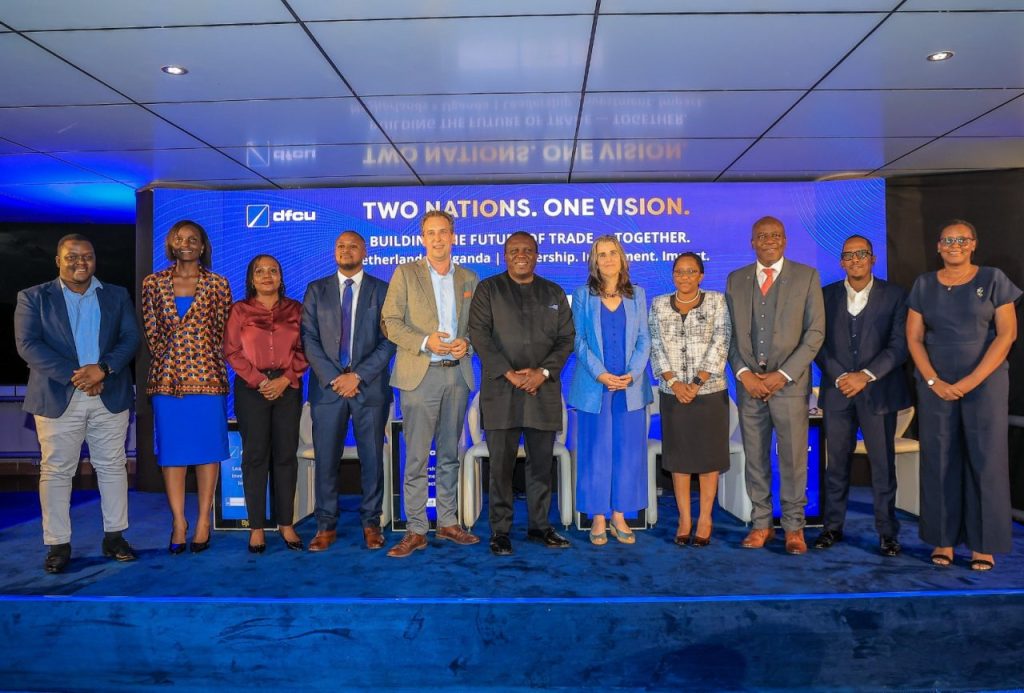
Against this backdrop, dfcu hosted members of the Netherlands–Uganda Trade and Investment Platform (NUTIP), alongside representatives from the Embassy of the Kingdom of the Netherlands and Rabobank, at the dfcu Head Office in Nakasero. The engagement, held under the theme “Building the Future of Trade, Together,” brought together business leaders, financiers, and policymakers to explore practical ways to strengthen trade and investment collaboration between Uganda and the Netherlands.
Uganda and the Netherlands already share a meaningful commercial relationship. Uganda exports approximately USD 184 million worth of goods to the Netherlands annually, while imports from the Netherlands total about USD 289 million, reflecting strong two-way trade and growing investment linkages. The Netherlands also serves as a major European distribution hub, making it a strategic gateway for Ugandan exports into broader European Union markets.
For Uganda, agriculture remains central to economic growth. The sector contributes roughly 24 percent of GDP, employs more than 65 percent of the population, and accounts for a significant share of the country’s export earnings. Strengthening agricultural value chains, improving productivity, and expanding export capacity therefore remain key priorities.
Speaking during the engagement, Kate Kiiza, Executive Director and Chief Corporate and Institutional Banking Officer at dfcu, highlighted the Netherlands’ global leadership in agricultural innovation and the relevance of its experience to Uganda’s economic transformation.
“The Kingdom of the Netherlands has earned global respect for how it has transformed agriculture into a high value, innovation driven sector. For a country of its size to be the world’s second largest exporter of agricultural products speaks to discipline, coordination and long term thinking,” she said.
Kiiza noted that Uganda’s ambitions to modernise production, strengthen value addition, and expand export capacity will depend heavily on partnerships that combine capital, technology, expertise, and market access.
“Agriculture remains central to our economy, not only as a source of livelihood but as a foundation for growth. As we modernise production, strengthen value chains and expand export capacity, partnerships that combine capital, technology and market access will shape how quickly we move and how sustainably we grow,” she said.
Within this growing trade corridor, dfcu has positioned itself as an active financial partner supporting cross-border investment and enterprise growth. The bank has built collaborations with Dutch institutions such as Rabobank and FMO, the Dutch entrepreneurial development bank, to strengthen agricultural financing and enterprise development.
Through initiatives such as the Best Farmers programme and its broader agricultural financing portfolio, these partnerships have supported knowledge transfer, improved farm management practices, and stronger governance within agribusiness enterprises. According to Kiiza, such collaborations have contributed to improved productivity and greater export readiness among Ugandan agricultural businesses.
Looking ahead, Kiiza emphasised that the next phase of collaboration between Ugandan and Dutch businesses must focus on scaling enterprises and strengthening value chains.
“The next phase is about scale, strengthening value chains, supporting larger enterprises, and ensuring that promising businesses have the financial structures required to compete regionally and globally,” she said.
She added that achieving this will require responsive banking systems, structured trade finance solutions, and institutions that understand the realities of cross-border commerce.