

The Uganda Wildlife Authority (UWA) Executive Director,Dr. James Musinguzi has revealed that the external environmental factors play a major role in the dwindling population of lions in the country.


- Advertisement -
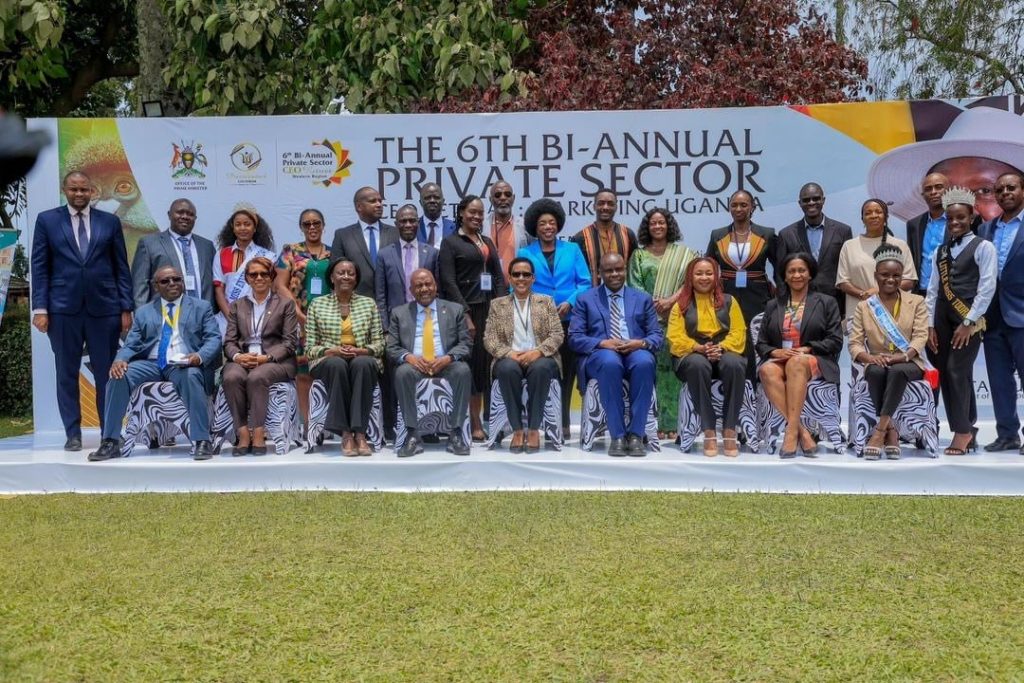
Speaking in Fort Portal City during the 6th Bi-Annual Private Sector CEO Retreat, a high-level forum dedicated to accelerating Uganda’s vision of becoming a premier global tourism destination where over 200 chief executive officers, policymakers, and private sector leaders have convened , Dr Musinguzi said that unless such factors are minimized or eliminated, the lion population will continue to go down and may reach undesirable extinction levels.
Musinguzi said with limited rangeland available for them, lions now have limited chances of survival due to limited space within which they can range. Those that survive the young age mortality never get chances to explore for more territories and mates resulting into depression that often leads to reduced breeding.
‘’Its therefore the responsibility of all Ugandans to ensure that this precious species is not lost to extinction. I therefore call upon everyone to join UWA in ensuring the survival of lions in the country’’, Dr.Musinguzi clarified that the lion tracker collars have been instrumental in helping surveillance to control lions from crossing into communities.

- Advertisement -
Technology is shaping conservation.
‘’UWA is investing in drones and a helicopter for real-time monitoring of lions and other wildlife, strengthening protection and ensuring evidence-based recovery efforts’’, said Dr Musinguzi .
According to a report read by Dr Musinguzi, the African lion (Panthera leo) is a keystone species that plays a critical role in maintaining ecosystem balance within savannah landscapes. Lions naturally occur at relatively low densities as they occupy the apex of the food chain and have large space requirements.
Ecologically, lions are predominantly savannah habitat dwellers and rarely occur in thick bushes and forests. Mostly territorial, lions often cross their territories to concur new space and look for mates.
In the savannah ecosystems, they play an important role in maintaining ecosystem health and balance through predating on herbivores, often targeting sick and non-breeding old individuals, thereby keeping disease down, and hence cleaning the environment through disposing of carcasses.
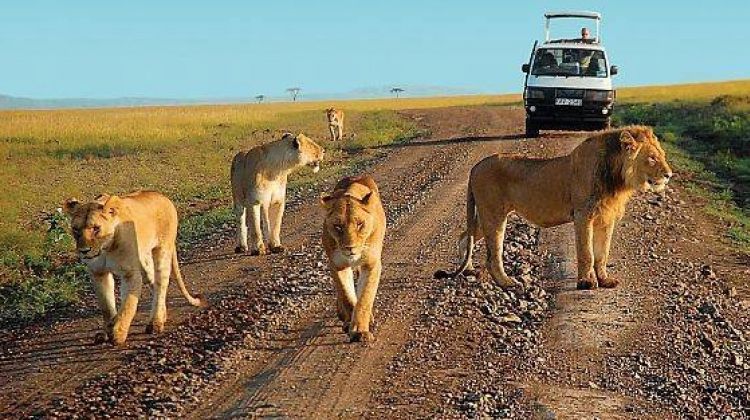
Initially wide spread all over Africa’s savannah ecosystem, lions are currently restricted to mainly protected areas due to a number of factors, most of which are anthropogenic in nature. Due to loss of habitat and their constant interface with humans and human activities, lions are now extinct in about 26 African Countries.
They are now are currently listed as “Vulnerable” on the International Union for the conservation of Nature(IUCN) Red list of threatened species.
However, in some parts of the continent, the lions are now classified as “Critically Endangered”. Lions have vanished from over 90% of their historic range, with the biggest decline occurring in the last 2 decades.

In Uganda, the lions once roamed the entire country and beyond. This is proved by their wide mention in all of Uganda’s languages. The lion populations have faced significant population declines due to habitat loss, conflict with humans, and retaliatory killings by herdsmen, especially in the late 20th and early 21st centuries.
Lions are now said to be extinct in Buganda, Busoga, Bugisu, Ankole and most of Acholi regions. They are now only restricted to the savannah ecosystems of the Queen Elizabeth protected Area (QEPA), Murchison Falls Protected Area (MFPA), and Kidepo Valley Conservation Area (KVCA). In QEPA, the lions that occur in Ishasha are known for their unique behavior of climbing trees (mainly Ficus trees due to their shades and soft bark that enables the claws of the carnivore to penetrate and enhance grip) and have been branded the “Ishasha tree-climbing lions” by tourists. Lions, after the Mountain Gorilla, are the most sought-after species by tourists visiting Uganda. This makes lions important to Uganda’s economy and ecology. Unfortunately, the communities around these parks has not appreciated this immense value that the Lions add to our country and environment.
Populations trends in Uganda
Lions in Uganda have continued to lose their lives as the population throws and feeds them on meat laced with poison. Between May 2006 and July 2007, 15 lions were killed in or next to QEPA in attacks blamed on landless herdsmen defending their cattle. In May 2010, five lions were killed in the same park in another possible poisoning case.
Lions, once known to have been over 1,000 individuals in the country, have continuously declined in number to now less than 400 individuals that only occur in the three big savannah ecosystems mentioned above. The wildlife census conducted by UWA between 2018-2023 indicate a declining lion population across two critical savannah parks of Queen Elizabeth and Kidepo Valley protected areas respectively.
According to a lion survey report by Omoya et al. 2014, Uganda had 416 lions across five (05) protected areas as follows: 144 in QEPA, 132 in MFPA, 132 in KVCA, 05 in Tooro-Semliki Wildlife Reserve (TSWR) and 03 individuals in Lake Mburo National Park (LMNP) respectively. The populations have since declined with TSWR and LMNP losing all their populations while QEPA and KVPA currently have only 39 and 12 lions respectively. MFPA still posts an impressive population of approximately 240 individuals mainly within the Delta area, north of the park. In a nutshell, Uganda’s lion population now stands at an estimated population of 291 individuals.
Causes of lion population decline
The lion population in Uganda has been under significant threat, with Kidepo Valley National Park (KVNP) experiencing a notable 88.6% decline in lion numbers between 2009 and 2022. Major contributing factors are anthropogenic in nature, such as poaching, human-wildlife conflict, insecurity, habitat degradation, invasive plant species spread and encroachment. Anthropogenic sources of mortality at the edges of small reserves therefore depress carnivore densities, even within protected areas because animals move beyond their boundaries. In Uganda, most protected areas are relatively small, isolated and have high human pressures at their edges.
Additionally, most Ugandan national parks and wildlife reserves are bordered by livestock rearing communities, and lions regularly kill livestock in these areas. Consequently, lions are often killed in retaliation (through poisoning, trapping or shooting) for livestock killing and injury. Specifically, the lion population has continued to decline because of the following outlined factors:
Retaliatory killing/ human wildlife conflicts. Currently, most of the lion deaths result from human-wildlife conflict due to livestock predation within and outside the protected area. This has mostly been more pronounced in QEPA. As mentioned above, between May 2006 and July 2007, 15 lions were killed in or next to QEPA in attacks blamed on landless herdsmen defending their cattle. In May 2010, 5 lions were killed in the same park in another possible poisoning case in the northern sector where the Basongora cattle keepers live. Lions in the Karamoja, Ntoroko and Ankole regions have also suffered the same fate as the cattle keeping community of the Karamajong, Batuku and Banyankole (respectively) could not allow the thriving of the lion populations in these areas.
Reduced habitat range . lions are known to roam in wide habitats where they occur to look for new territories and mates. Such conditions enhance their productivity and multiplication as they have more chances of survival. In Uganda where most of the migratory corridors have been blocked by crop growing, settlements and urbanization, the lions are now restricted to the protected areas.
-
Mortality at young age – about 40% of the young lions die before they reach maturity due to disease. Sometimes the young die because of starvation as a result of lack of food which is competed for within the families where prey is scarce.
-
Competition from other predators – Some of the cubs are killed by other predators (hyenas and Leopards mainly) to reduce competition for resources/ prey. This usually happens as their mothers move out to hunt and leave them without security.
-
Rituals and cultural beliefs – Some of the lions have been killed because of traditions and cultural beliefs. In the Karamoja region, lion killing was associated with bravery and teenagers were required to kill lions before they marry to show their ability to protect their families. This, and retaliory killing, are the two main reasons why the lion population in the Karamoja region is very low and already exterminated in areas of Kotido, Moroto, Napak and Nakapiripirit.
-
Poaching – Some lions have been killed by poachers to reduce the threat of being killed while inside protected areas. Some of the lions however have been found to be untargeted victims of poaching due to snaring that often catch lions like it happened in 2024 in MFPA. Other lions are poached because of their parts from which community members extract lion fat for medicinal purposes. For example, 6 lions were poached in March 2021 for their parts which were found missing on the carcasses.
-
Invasive plant habitats – Lions are more productive in open savannah habitats as such conditions facilitate the growth of the herbivore population that form the main food source of the lions. Lions thrive best where there is availability of food. Invasive plant species spread in the savannah habitats often result in reduced roaming space and food sources for herbivorous animals. This results in reduced breeding and henece translates into limited food sources for the lion. This in the end affect the breeding of lions and puts too much pressure of the lion from other competing carnivores. This factor also forces lions to look for easy targets in the neighborhood, resulting into human-wildlife conflict and retaliatory killings
-
Natural self-killings – Male lions usually kill off-springs that are not their own to eliminate competition in gene perpetuation. Male lions will also kill cubs belonging to other males to facilitate females go into ovulation and hence ready to receive them for mating.
-
Killings by large harbivores – mostly common in Kidepo, the dwilling population of lions in KVCA is mainly due to killings by the large herds of buffaloes. During lion hunts, the buffaloes in their thousands surround the lions and corner them to death. The merciless harbivores gore them with their sharp horns to death. This generally is the single most reason that has contributed to the dwindling population of lions in the Kidepo landscape
What steps is UWA doing to save the lion population
-
Awareness – UWA has continued to sensitize the masses for mindset change as one way of ensuring coexistence of lions with human beings.
-
Compensation – UWA, in collaboration with the large Carnivore Program commenced the instant compensations for the damages caused by lions. This was commenced before the 2019 compensation clauses were evoked in the Law to reduce lion killings around the QEPA fish enclaves and neighboring community areas. With the introduction of the compensation clauses in the law, a mix of the two methods is being applied to ensure the survival of lions around QEPA as the legal means of compensation do not provide immediate replacements of the lost livestock.
-
Lion recovery program – UWA has commenced the lion population recovery program. The program focuses on intentional re-introduction of lions into the proected areas to boost the small populations that are existing in the three savannah protected areas.
-
Protection – enhanced patrols and intelligence to deter targeted poaching of lions for their parts. UWA has enhanced its intelligence, investigations and prosecution units to ensure the general protection of the lions and wildlife in general
-
Reduced livestock grazing within the PAs – UWA has also embarked on ensuring limited grazing activities within the protected areas to reduce the chances of lions coming closer to livestock. UWA is also working with its Partners to introduce interventions )like carnivore lights) that deter lions from approaching livestock at night. The communities have also been encouraged to put up stronger kraals/ livestock protection enclosures to ensure livestock protection at night.
-
Intentional reintroductions of herbivores to enhance food sources – UWA has of recent commenced intentional re-intorductions into Kidepo of the Uganda kobs to provide for easy-to-hunt food sources for lions. The kobs multiply faster and once well established with provide an easy source of food as the buffaloes tend to gang against the smaller pride sizes.
-
Invasive plant species removal – UWA is opening the areas that are mostly hit by invasive plant species to facilitate spread of the herbivores and minimize inter-pride fights that often result into self killings. The removal of invasive species will also enhance the breeding of the herbivores as the food sources become more available.
-
Fencing of the protected areas – fencing of the protected areas, especially the areas next to the livestock-keeping community will facilitate the protection of lions through separation. Fencing of the boundaries of the protected areas results into minimization of the interface between lions and livestock and reduces the retaliatory killings.
-
Establishment of lion breeding programs within protected areas – this ensures that lions are bred in controlled environments with limited competition. This is part of the lion recovery program but focuses on establishment of protective breeding enclosures where other predators and competing males are excluded to enhance the survival of the cubs
