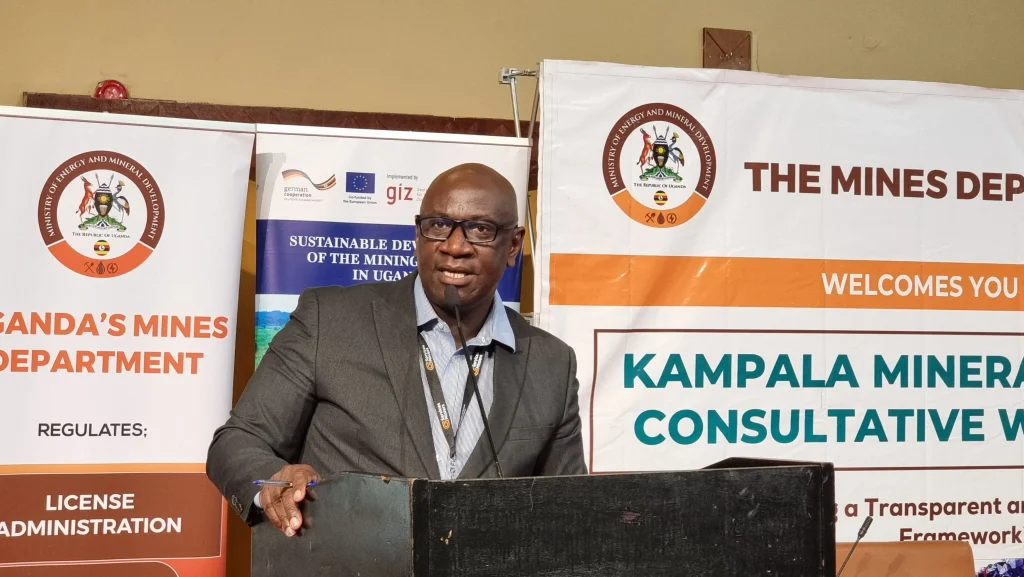

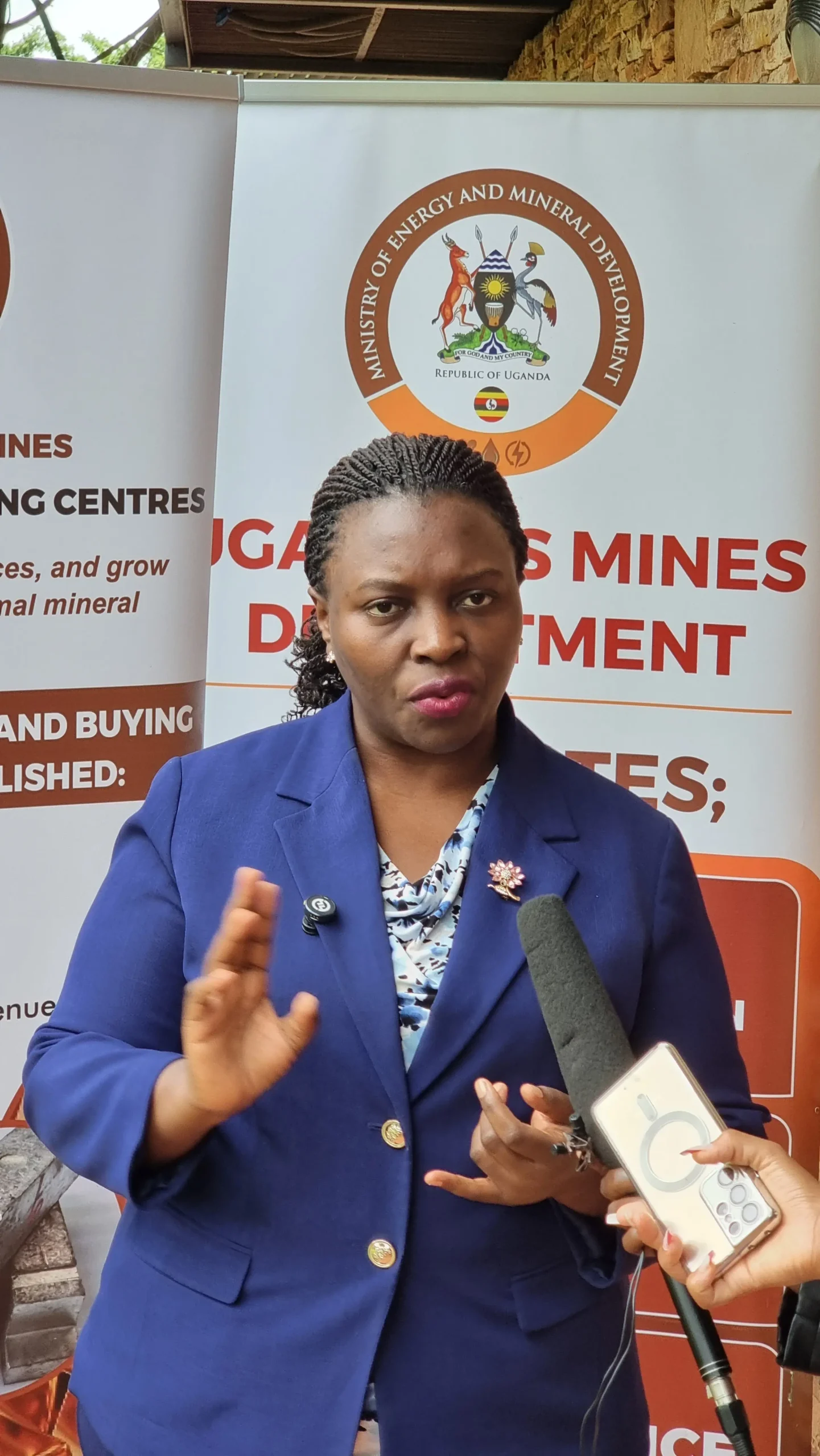
The Permanent Secretary at the Ministry of Energy and Mineral Development (MEMD), Eng. Irene. P. Bateebe has reaffirmed that the establishment of mineral markets and buying centers is at the core of the social economic transformation and a significant step towards formalizing mineral trade, enhancing transparency, and increasing government revenue.
- Advertisement -
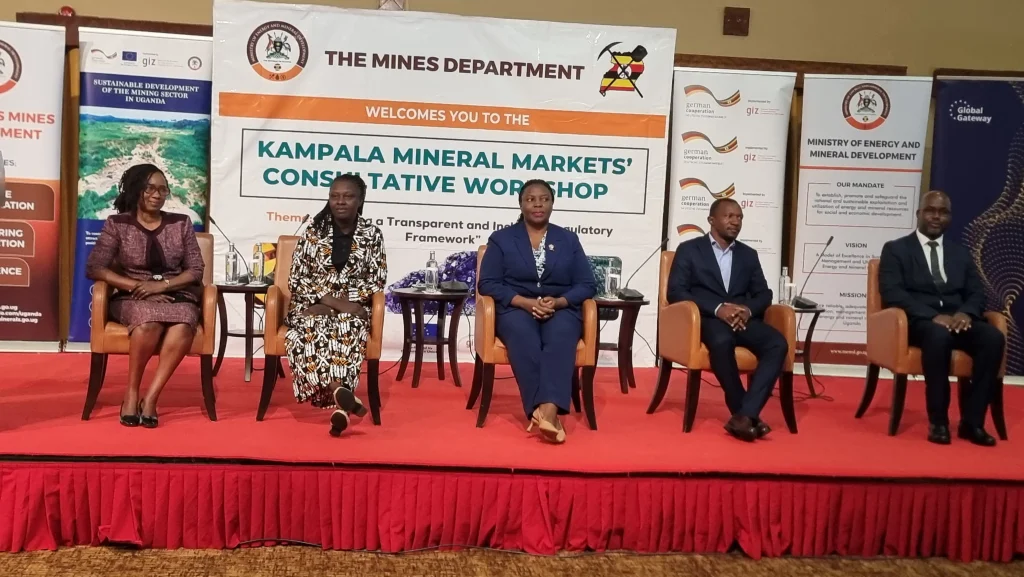
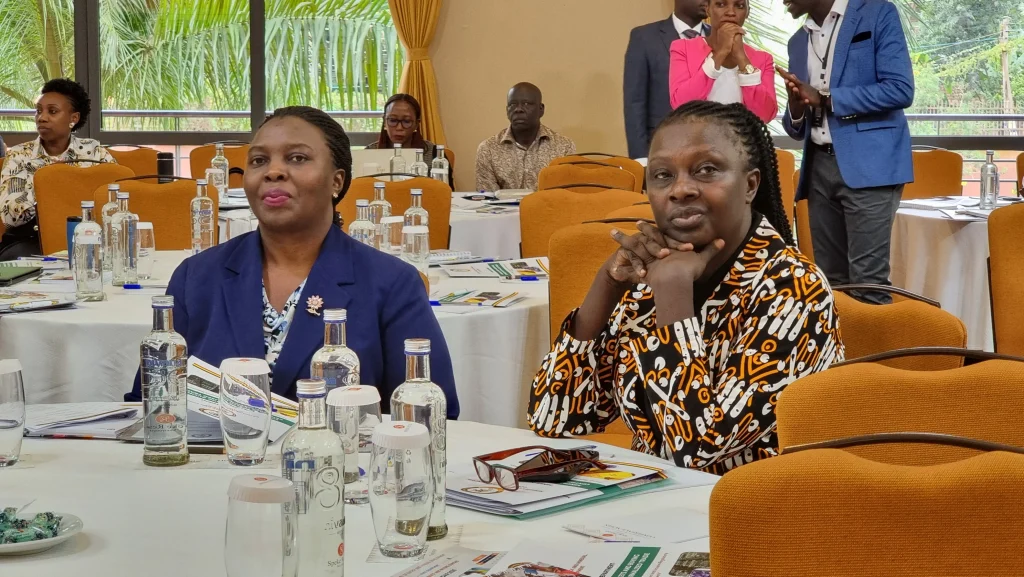
Speaking during a Consultative workshop on the proposed Mineral Markets and buying center Regulations in Kampala on 14th May, 2026 at Speke Resort, Munyonyo themed; ‘Building a transparent and inclusive regulatory Framework’, Batebe said government has enacted several policies and regulations, including the Mining and Minerals Act 2022, the Mining and Mineral (Licensing) Regulations, 2023, and several other regulations, as well as adhering to international provisions such as the Sustainable Development Goals and Uganda’s Vision 2040.
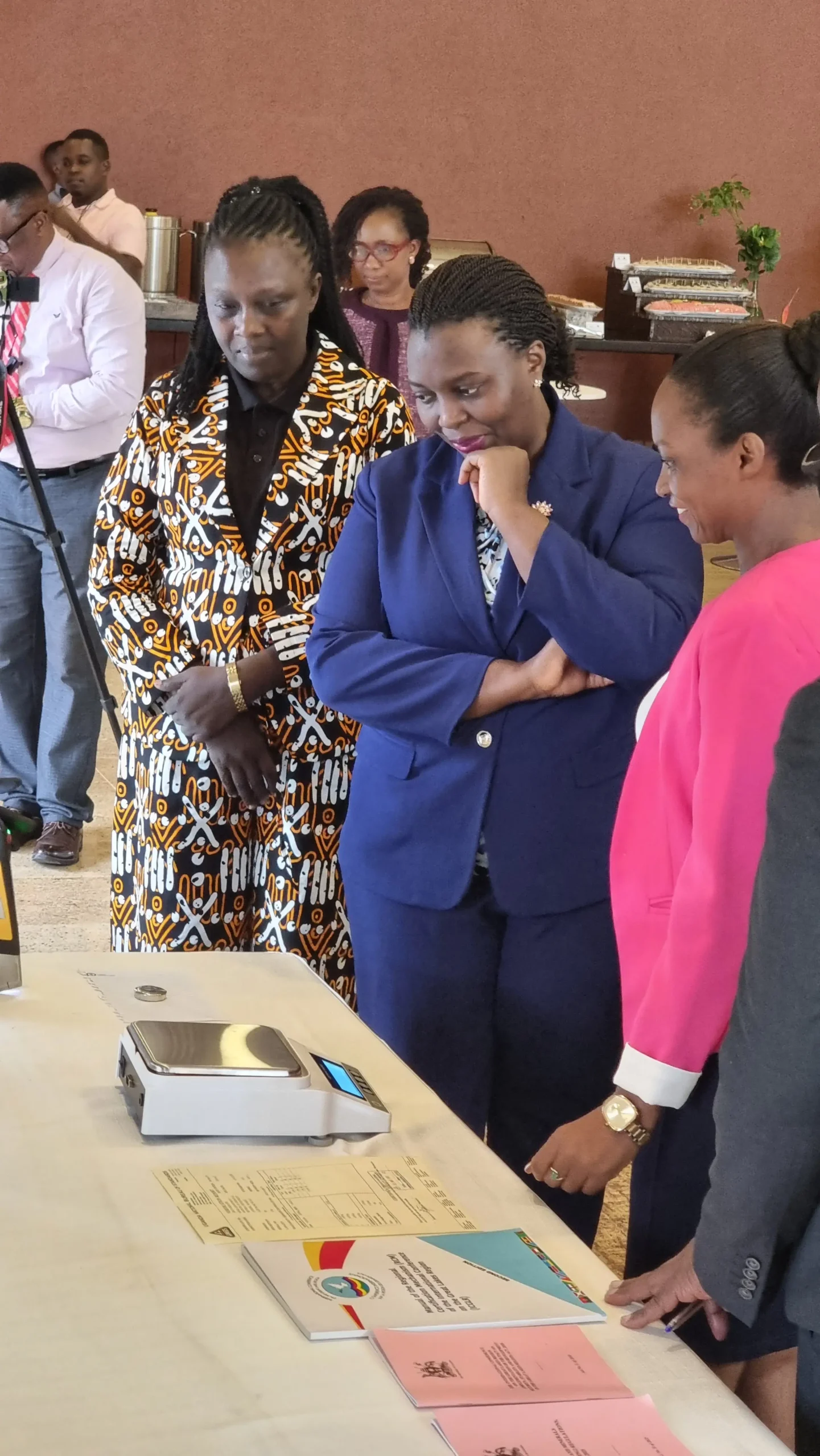
‘’To achieve these objectives, we have enacted several policies and regulations.Today we gather to shape the Mineral Markets Regulations that will bring order, value, and dignity to every gram of gold, tin, and gemstone produced in Uganda. it’s our collective responsibility to ensure these resources are harnessed and support sustainable economic growth and development’’, said Eng. Batebe.

She added that Uganda’s national development is anchored on the Country’s Vision 2040; the National Development Plan IV that has firmly positioned mineral development as a cornerstone for socio-economic transformation and these prioritizes value addition as a non-negotiable pillar for economic growth, focusing on developing our industrial parks, enhancing our energy infrastructure to power industries, enhancing mineral development and building the necessary human capital.
‘’By formalizing mineral markets, we are not just building a trading platform, we are creating opportunities for value addition, job creation, and community development. These markets will ensure that Uganda’s mineral wealth directly benefits its people, while also attracting responsible investment and enhancing compliance with international standards. As Uganda’s gold sector continues to develop, we anticipate substantial contributions to the economy, including increased export earnings, job creation, and global investment and contributions to GDP’’, added Batebe.
She noted that the Mineral market platforms shall facilitate trade in the gold, Tin and Gemstone, build capacity of miners and as well as provide services closer to the citizens.
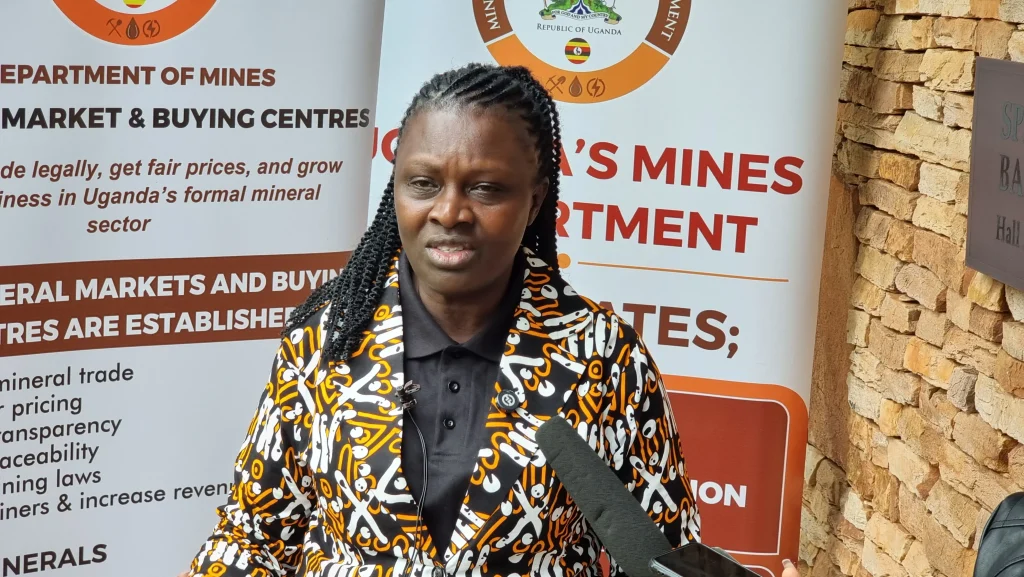
Addressing participants,Agnes Alaba, the Commissioner, Mines said Mineral market establishment involves creation of structured platforms to formalize trade, attract and protect investment, protect miners, boost investor confidence, improve value chains in the mining sector as well as ensure transparency and accountability.
She added that these initiatives aim to unlock mineral wealth, formalize artisanal and small-scale mining (ASM), and boost economic growth and employment by connecting miners to the formal market.
A mineral market is a centralized mineral business centre, platform or hub where sellers and buyers meet to transact business in minerals.
Alaba added that the establishment of Mineral markets have the potential to transform Uganda’s mining sector into a vibrant, inclusive, and globally competitive industry.
Loyola Karobwa, MEMD’s Senior legal officer, noted that informal hotel-based gold negotiations have increasingly become hotspots for fake gold scams, money laundering, illicit mineral exports and investor fraud.