

Uganda’s insurance sector arrived in Mbarara carrying more than conference bags and business cards.
- Advertisement -
![]() It brought with it a quiet tension, a question hanging in the air like unclaimed luggage, can the industry grow fast enough without losing the one currency it cannot manufacture—trust?
It brought with it a quiet tension, a question hanging in the air like unclaimed luggage, can the industry grow fast enough without losing the one currency it cannot manufacture—trust?
 It brought with it a quiet tension, a question hanging in the air like unclaimed luggage, can the industry grow fast enough without losing the one currency it cannot manufacture—trust?
At the 8th Annual Insurance Brokers Association of Uganda (IBAU) Conference held at Hotel Triangle from April 23 to 24, 2026, that question took center stage. Under the theme “Trust Reimagined: Delivering on the Promise,” industry leaders, regulators, and brokers gathered not for routine speeches, but for what felt like a strategic reckoning.

The numbers, at first glance, are impressive. Gross written premiums climbed to UGX 2.02 trillion in 2025, up from UGX 1.76 trillion the previous year. Claims payouts surged to UGX 950 billion, nearly half of total premiums, signaling improved responsiveness. Yet beneath this growth lies a subtle erosion: brokers now handle 28.03% of premiums, down from over 30% in previous years. Growth, it seems, is advancing on uncertain ground.
Opening the conference, Insurance Regulatory Authority CEO Alhaj Kaddunabbi Ibrahim Lubega grounded the discussion in a sobering reality. Drawing from decades of experience in building insurance institutions across the region, he reminded delegates that trust cannot be engineered in boardrooms.
“Trust is not built in policies or presentations,” he said. “It is tested at the moment of claims. That is where the industry either proves its promise or loses it.”
His remarks struck at the heart of the industry’s credibility challenge. In a sector where value is only realized during moments of distress, delays or inefficiencies in claims processing can quickly erode confidence built over years.
That concern was amplified by Bank of Uganda Deputy Governor Augustus Nuwagaba, who reframed insurance as a pillar of economic stability rather than a discretionary service.
“An economy is not stable if its people are unprotected,” Nuwagaba warned. “We have macroeconomic stability, low inflation, a resilient financial system but millions remain exposed to risk. That gap is not just financial, it is structural.”
Despite steady economic indicators, Uganda’s insurance penetration remains low, particularly among informal sector workers, rural communities, and small businesses. For many, insurance is still perceived as complex, expensive, and distant from everyday life.
It is within this delicate balance that ICEA LION stepped forward, not just as a sponsor, but as a thought leader pressing for a redefinition of how insurance operates in a digital, data-driven world.
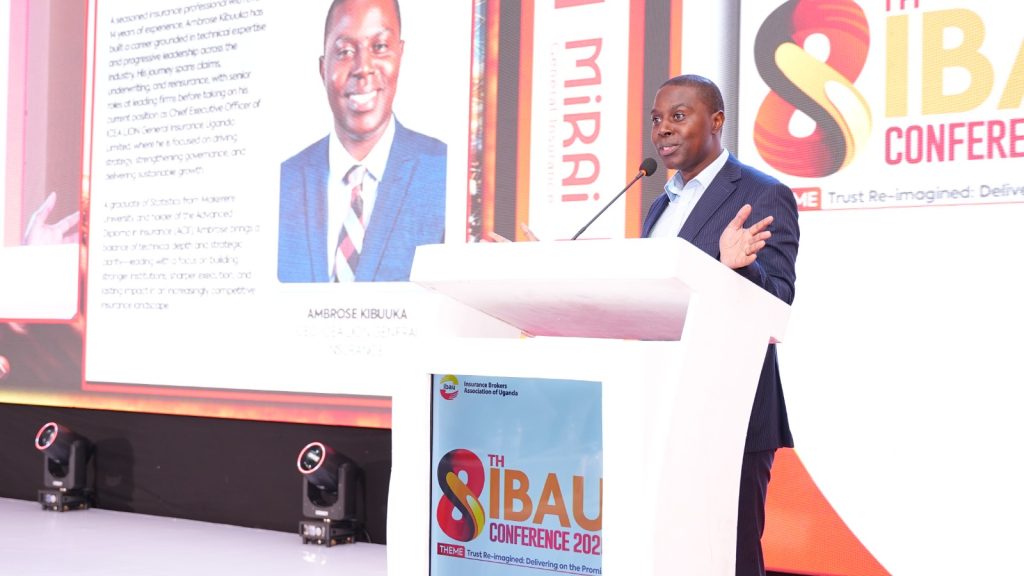
Speaking during the conference, ICEA LION General CEO Ambrose Kibuuka framed the future of insurance through a simple but powerful lens: connection.