

By John B. Habumugisha
- Advertisement -
Uganda’s aspiration to integrate into the global community dates back to the 1850’s – the era of early explorers, whose construction of railways and ports laid the foundation for this connection. Years later, much of the infrastructure they left behind still forms the backbone of African economies.
With the construction of new engineering projects like the Standard Gauge Railways in Kenya and Tanzania, the suspended 3. 2km Kigingo – Busisi Bridge across Lake Victoria and the East African Crude Oil Pipeline (EACOP); we are witnessing a significant shift – East Africa is deliberately investing in a future, employing local resources to design, lead and execute these projects – building intellectual capacity and the operational strength to manage them for their shared prosperity.
The East African Crude Oil Pipeline (EACOP) is one of Africa’s most technologically advanced infrastructure systems – a “smart pipeline”, recognized as one of the most innovative in the world. Designed with precision, safety, and sustainability in mind, the Project continues to make steady progress, with overall completion now over 80%.
All 1,443 km of the pipeline has been produced and delivered, of which 1,4G0 km has been welded, and 800 km backfilled. Reflecting EACOP’s strong commitment to National Content in Uganda and Tanziana, Ugandans now represent 91% of the workforce (2,878 out of 3,154 employees), contributing to every stage of the Project’s development.
So, what makes it so ‘smart’? This isn’t just a steel tube in the ground. This pipeline has a digital nervous system. Imagine fibre-optic cables running alongside the pipe, constantly ‘listening and feeling’. They can detect a temperature change or a vibration, pinpointing a potential leak within a few meters, instantly. This core feature of the pipeline is next-generation environmental monitoring
At the heart of this system is the SCADA (Supervisory Control and Data Acquisition) network, the project’s “brain.” From central command centres, technicians can monitor pressure, flow rate, and the status of the 76 Main Line Block Valves (MLBVs) along the entire route, allowing for instant remote control and rapid isolation of any section. This is complemented by advanced construction techniques: 1,4G0km of pipe already welded using state-of-the-art methods, coated with Fusion Bonded Epoxy and polyurethane foam respectively for maximum corrosion resistance and thermal efficiency.
The development of the Tilenga and Kingfisher upstream oil fields, which feed the pipeline, are massive projects. Crucially, the energy required to power these operations and the pipeline’s Pump Stations have accelerated national power projects, adding significant megawatts to the national grid for public use. The EACOP will be largely powered by Uganda’s hydropower grid, potentially making it one of the lowest-carbon- footprint pipeline systems of its kind.
Furthermore, the region has benefited from significant upgrades to logistical infrastructure. New and upgraded highways in the Albertine region are improving connectivity for communities far removed from the oil sector, unlocking new economic corridors.
For me, however, the most profound infrastructure isn’t made of concrete or steel; it’s built by humans. Through the EACOP Academy and Universities partnerships, young locals/ nationals are being trained. Beyond creating pipeline workers, we’re creating welders, engineers, data analysts and project managers. Over 1,500 youth have already been trained, with hundreds more gaining international experience, thus building a skills base that will fuel every other sector for decades.
So, imagine this: a farmer in Hoima sending fresh produce to markets faster on newly paved all-weather roads; a Ugandan engineer in Kampala monitoring a digital dashboard that spans two nations; a student from the EACOP Academy using their skills to build renewable energy plants in 2030+.
That’s the future we’re actually building. – The roads, the power lines, the airports, and the skills. That’s the real legacy. That’s the permanent infrastructure.
The true judgment of EACOP will come 10 to 20 years from now, when we see if we leveraged this project to build a smarter, more connected, and more self-reliant Uganda and East Africa. The pipeline moves oil, but its greater purpose is to propel a region forward. We are finally moving from being a source of raw materials to becoming masters of our own complex, smart technological destiny.
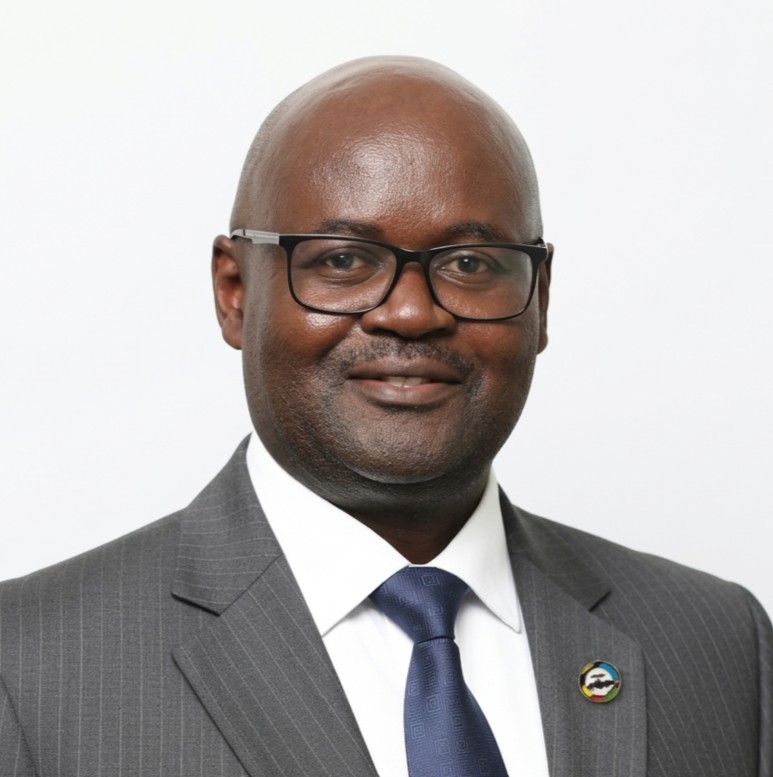
The author is the Deputy MD of EACOP.
