

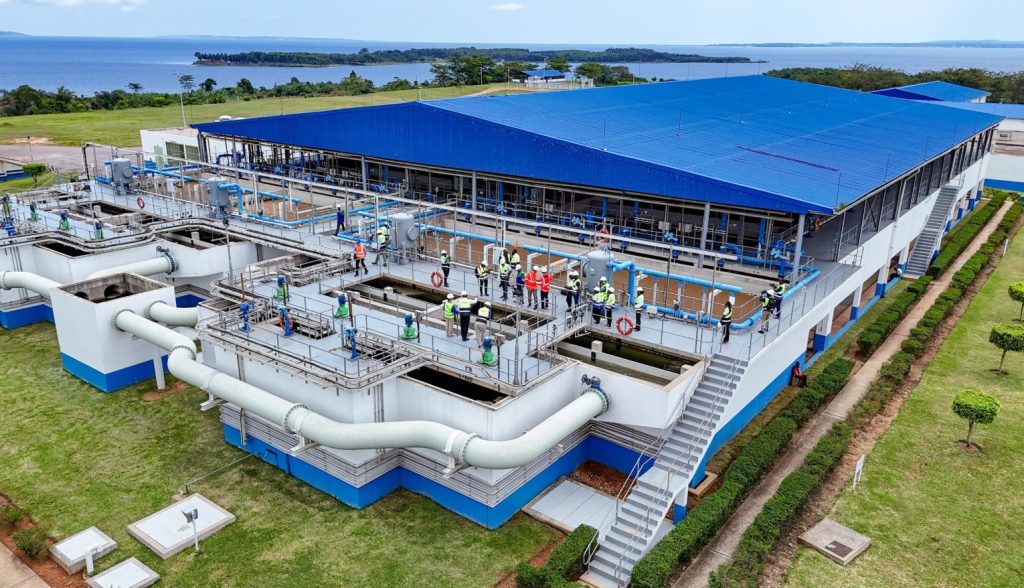
KATOSI, Uganda — The government of Uganda, through the National Water & Sewerage Corp. and the French Development Agency, or AFD, is in the final stages of an expansive network project to connect millions of Ugandans to the Katosi water supply.
- Advertisement -
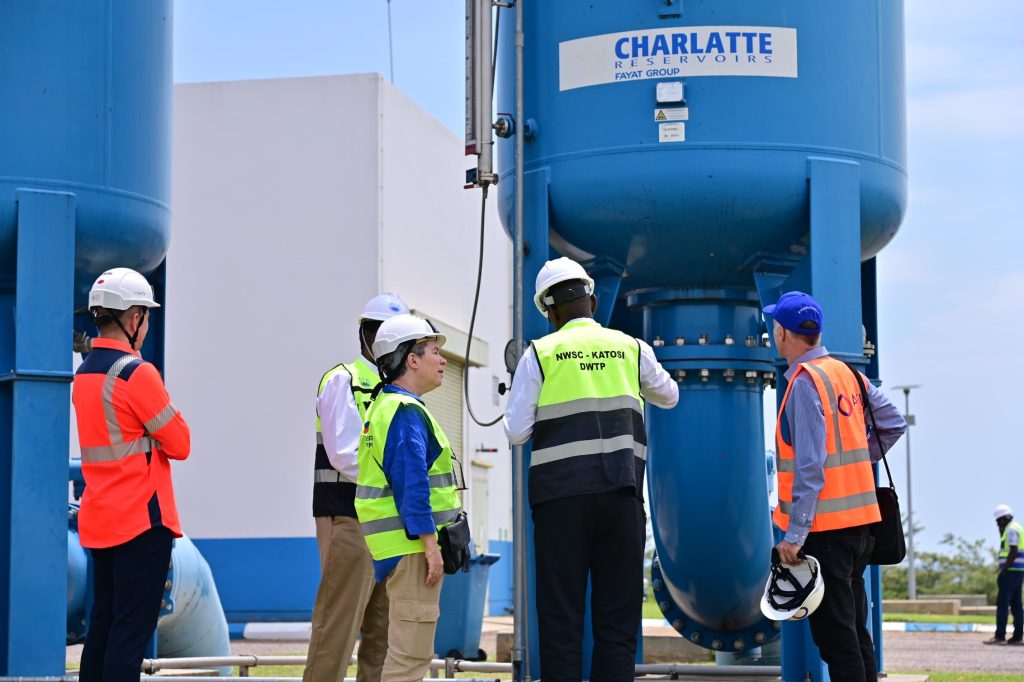
French Ambassador Virginie Leroy on Thursday toured the project and emphasized that the French-funded Package 2B project is a strategic investment. She said the work ensures that the massive production at Katosi translates into actual water in the taps of households in North and West Kampala.
During the site visit, Katosi Plant Manager Joseph Tweheyo Baine informed the ambassador that while the Katosi plant has the capacity to produce 160 million liters of water per day, it currently operates at approximately 52% capacity. Baine noted that this is due to historical gaps in the distribution network, which the current project is designed to eliminate.
The expansion project, which began in February 2025, involves the installation of 70 kilometers of primary pipelines and the construction of major new reservoirs at Kanyanya, Kabulengwa and Mutungo. These works are engineered to bridge the gap between the high production at Katosi and the surging demand in the Greater Kampala Metropolitan Area.
Once completed, the project will bring reliable water services to rapidly growing neighborhoods including Kira, Kasangati, Gayaza, Matugga, Kawempe, Nansana and Wakiso. Baine reported that pipe laying is already underway in the Mpererwe-Kawempe-Nansana section, with substantial completion of the entire network scheduled for August 2027.
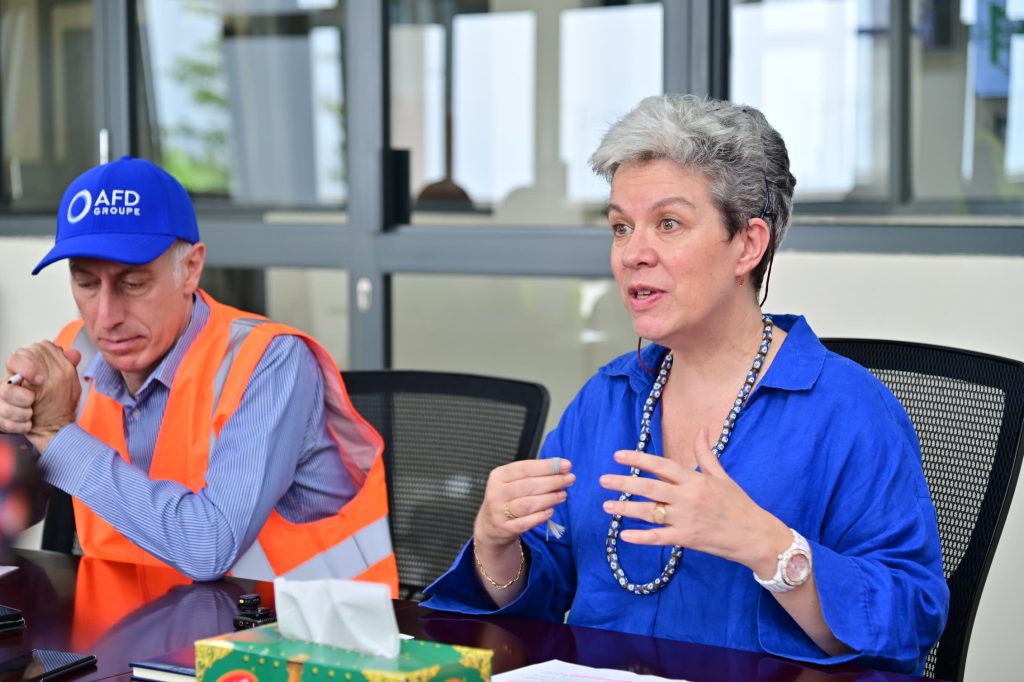
The ambassador commended the NWSC for its efficient performance and focus on value for money. She noted that the project is designed with an inclusive approach to ensure even the most vulnerable residents are reached. A pro-poor component co-funded with KfW has already delivered 1,400 standpipes with prepaid meters and 64 public sanitation facilities, serving 450,000 people in informal settlements.
Ambassador Leroy held up the Katosi Water Treatment Plant as a model for infrastructure efficiency and international partnership. The plant is on track to supply safe drinking water to millions of people in the Greater Kampala Metropolitan Area by 2030.