
Government to adopt Spiro Electric bikes in their operations

Government to adopt Spiro Electric bikes in their operations PM Nabbanja commended Spiro for positioning Uganda as a potential net source of electric mobility solutions in Africa
0 9,003

Spiro Uganda’s push toward electric mobility received a major endorsement this week as the Rt. Hon. Robinah Nabbanja, Prime Minister of Uganda, led a high-level government delegation on an inspection visit to it’s production facility at Namanve Industrial Plant.

PM Nabbanja commended Spiro for positioning Uganda as a potential net source of electric mobility solutions in Africa

- Advertisement -

Accompanied by the Minister for Science, Technology and Innovation, Dr. Monica Musenero, the Prime Minister toured the plant and assessed the progress of the company’s operations, investment commitments, and contribution to Uganda’s national development agenda.

During the visit, Nabbanja commended Spiro for positioning Uganda as a potential net source of electric mobility solutions in Africa, noting that the company’s investment aligns with the government’s long-term strategy to transition public transport systems to electric power by 2030.
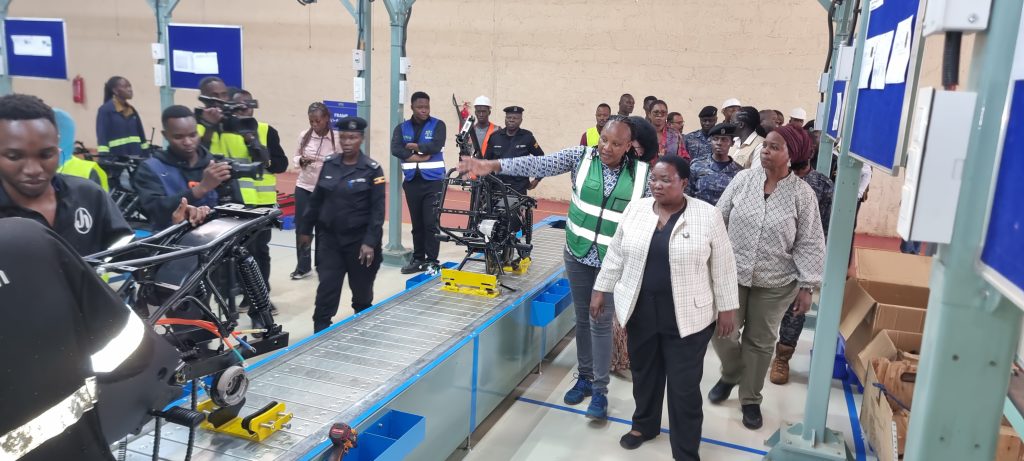
She said the initiative supports Uganda’s National E-Mobility Strategy, adopted in 2023, which prioritises local manufacturing, development of charging infrastructure, and the creation of a skilled workforce to support the country’s transition to cleaner transport.

- Advertisement -

“The government appreciates the massive investment that Spiro has made in Uganda,” the Such initiatives strengthen our commitment to innovation, job creation and environmental sustainability.”

Nabbanja revealed that President Yoweri Museveni has encouraged government ministries and agencies to explore the adoption of Spiro electric mobility solutions in their operations, as part of efforts to support the transition to cleaner and more sustainable transport systems.

She also praised the company for fulfilling the commitments it made to the government within 18 months, noting that the investment has already had a significant impact on employment and skills development.

Currently, more than 4,000 young Ugandans are engaged in Spiro’s electric mobility ecosystem. Many of them have been trained to assemble, repair and maintain electric motorcycles, contributing to the growth of a new technology-driven workforce.


Dr. Monica Musenero, the Minister for Science, Technology and Innovation emphasised the importance of science and technology in driving economic transformation and solving real-world challenges facing the country.

“The Ministry of Science, Technology and Innovation remains committed to supporting this industrialisation and wealth-creation initiative. We will continue to ensure a conducive policy environment that enables Spiro to grow and contribute to Uganda’s economic transformation.” Musenero said.

Uganda spent over $822 million on importation of vehicles in the 2024/2025 financial year, a trend that continues to drain foreign exchange and contribute to rising urban pollution.

With nearly 787,000 vehicles imported annually; estimated to emit over 1.7 million tonnes of carbon dioxide annually and costing the economy more than $1.2 billion annually when fuel imports are included.

With a deployment of 50,000 bikes by June this year, this is estimated to reduce carbon emissions by approximately 175,000 tons, a key achievement in improved health conditions, clean air circulation, lower fuel costs for riders, and strengthen Uganda’s position as a regional hub for electric mobility innovation.

Speaking during the event, Mr. Bruce Mucunguzi, the Deputy Country Head said the company plans to significantly expand its charging infrastructure in the coming months by deploying 1,250 additional battery swap stations by June and increasing the network to 2,500 swap stations by the end of the year.

This expansion is expected to support the rollout of an additional 50,000 electric motorcycles before the end of 2026.

Bruce attributed the plant’s success to collaboration between Spiro and government, local workers, franchise partners, dealers and the broader business community.

The production facility is designed with the capacity to assemble a minimum of 450 motorcycles per day, a scale that demonstrates the growing potential of Uganda’s manufacturing sector. This also plays a key role in reducing urban air pollution, lowering fuel costs for riders, and strengthening Uganda’s position as a regional hub for electric mobility innovation.

Under the national e-mobility roadmap, Uganda hopes to produce up to 500,000 electric mobility units annually by 2030, including motorcycles, buses, sport utility vehicles (SUVs) and other transport solutions.

Spiro is the leading e-mobility a cross Africa, providing innovative, eco friendly, affordable electric transportation solutions that transform urban mobility, reduce carbon emissions and promote a cleaner environment.

Leave A Reply

Your email address will not be published.