

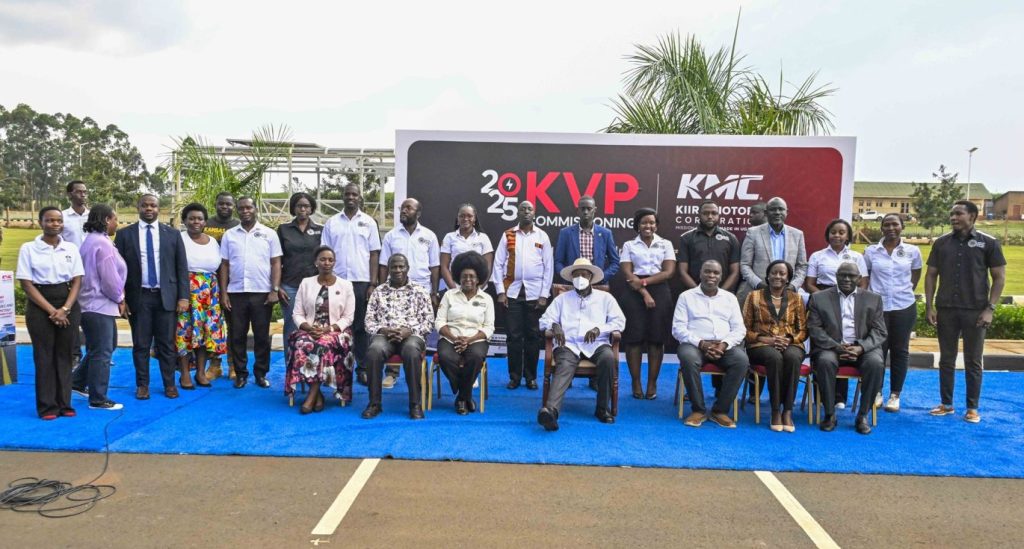
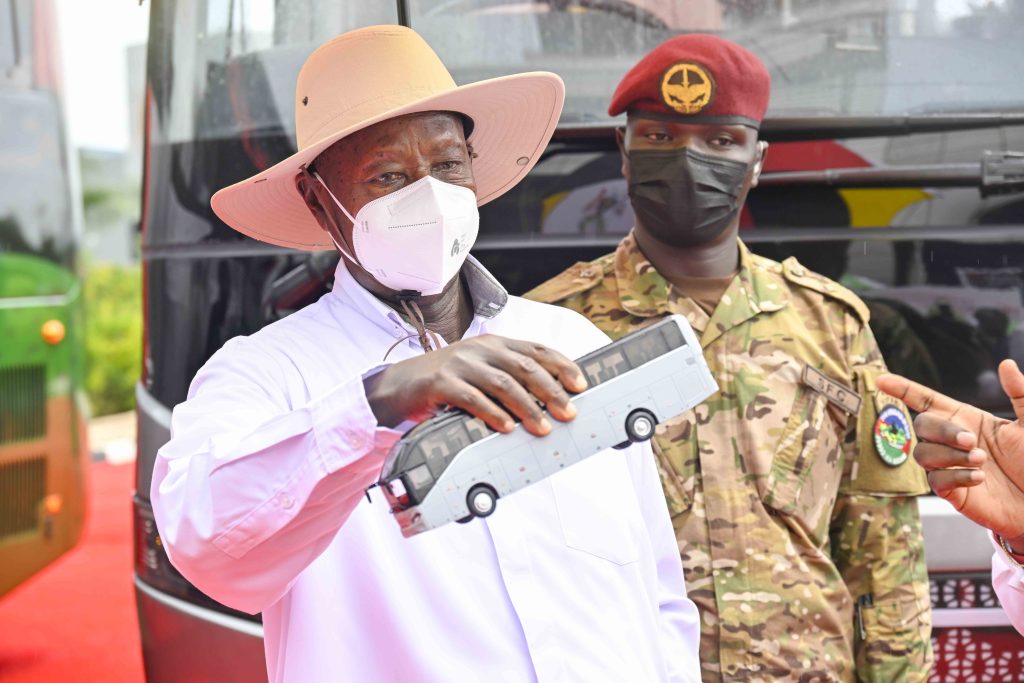
President Yoweri Kaguta Museveni yesterday commissioned the Kiira Vehicle Plant in Jinja.

- Advertisement -
The plant is the largest vehicle facility in Africa with a comprehensive motor vehicle production process.
Kiira Vehicle manufacturing plant construction started in 2019 up to 2024 when all vehicle production systems were fully installed and manufacturing started in March 2025 by Kiira Motors Corporation with an initial investment of USD 120 million.
During the commissioning, President Museveni revealed how immense scientific innovations like Vehicle Manufacturing Plant was contributing to the national economic growth of Uganda, saying it employs hundreds of Ugandan engineers and it’s posed to save the country USD 800 million from car imports and. He also highlighted its positive impact on the country’s balance of trade deficit on vehicles.
- Advertisement -
“These young people I found in the factory have jobs, where would they be working if we didn’t have kiira?” he inquired.
President Museveni further revealed how the government intends to expedite iron ore exploration in districts with iron ore deposits to avail high quality steel needed by the Kiira Vehicle Manufacturing Plant and other factories to reduce the USD 900 million spent annually on importation of steel.
“We have got some steel factories using scrap, but scrap isn’t good enough for this type of work, therefore it’s these new factories that we are building now that are purifying our iron ore into high quality steel which is needed here. Uganda is fortunate to have some of the biggest iron ore in the world in Kabale and Butogota,” he said.
“For the first time the transport sector is beginning to be integrated in the form of the Kiira vehicle plant. This is what is beginning to happen. If we do it successfully, we shall save USD800 million from steel alone.”
Additionally, President Museveni rallied Uganda scientists and leaders to focus on production for more sectors of the economy to address the huge hemorrhage of funds into importation.
He explained that different sectors of the economy require complementary local production lines of their inputs that he described as vertical and horizontal economic integration needed for Uganda and Africa at large to thrive.
He reminded Africans to regain their self-confidence, focus on mechanisation, citing the example of the transformation of the dairy industry, a similar approach needed to produce lithium batteries and other products required for full economic integration.