

By Namutebi Sumayiya

- Advertisement -
Uganda government says in an effort to end Poverty in all Its Forms Everywhere, it has made progress in reducing the proportion of the population living in monetary and multidimensional poverty where the incidence of monetary poverty (all ages) declined from 21.4% in 2016/17 to 20.3% in 2019/20, as a global initiative to eliminate Poverty.
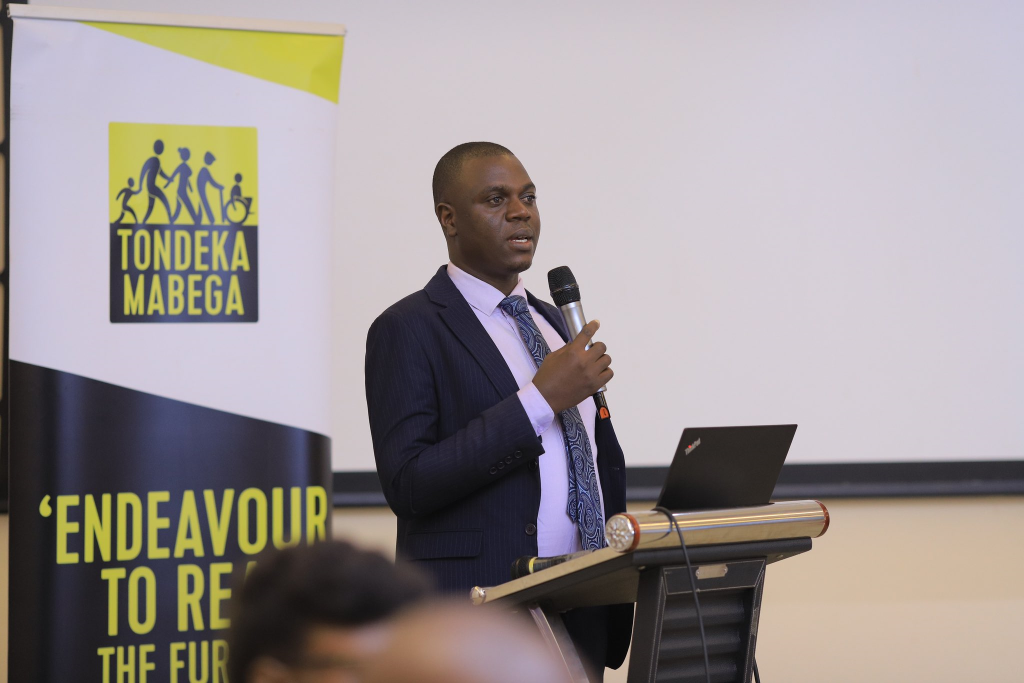
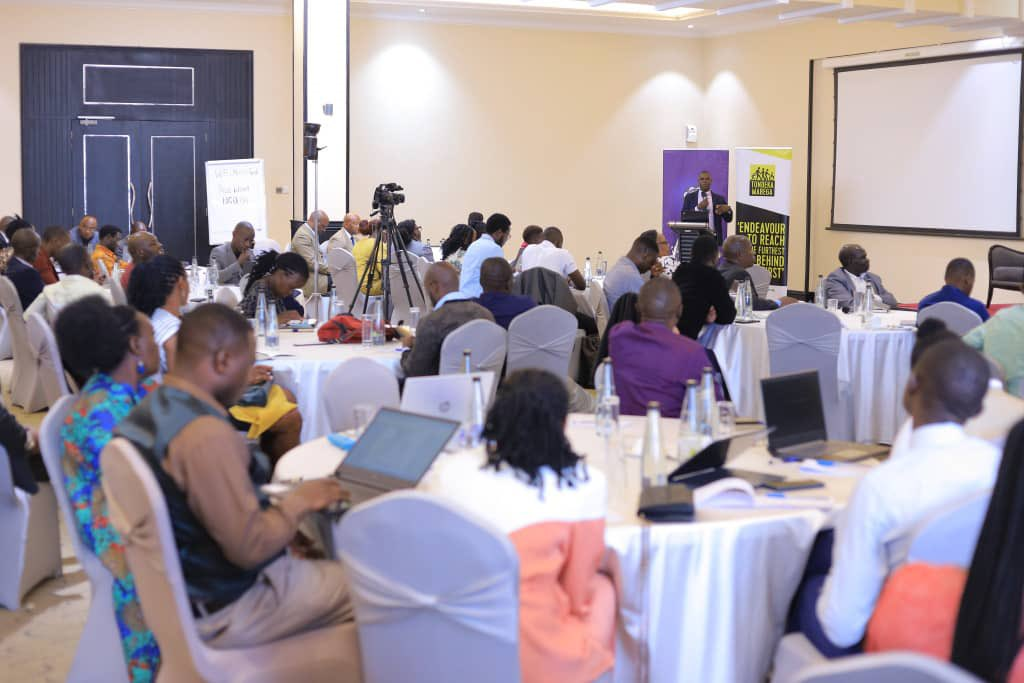
Speaking during the Uganda’s 3rd Voluntary National Review Report On the Implementation of The 2030 Agenda for Sustainable Development at Méstil Hotel & Residences in Uganda’s Capital Kampala, Pascal Byarugaba, the Program Monitoring and Evaluation Specialist at the SDG secretariat in the Office of the Prime Minister (OPM) said government is determined to make Investments in the six commitment areas that are expected to accelerate SDG implementation and cause socio-economic transformation among its people and communities.
‘’ The Government of Uganda has advocated for the inclusion of cleaner production methodologies that demonstrate how scientific and technological innovations influence the production cycle in ways that benefit the environment. This dedication exemplifies initiatives to promote sustainable consumption and production, such as cleaner production methods, a sustainable cities programme, urban transport reforms, biomass co-generation, and dissemination programmes on efficient cooking stoves’’, said Bayarugaba.
- Advertisement -
He added that the urban population of Uganda has since increased from 12% in 2012 to 26.5 in 2021 and is projected to increase to 50% by 2050 and to promote and improve urban infrastructure and decentralize development, the Government elevated 15 municipalities to city status, in addition to the capital city of Kampala. Ten of these cities, including Arua, Mbarara, Gulu, Jinja, Fort Portal, Mbale, Masaka, Lira, Soroti, and Hoima, became operationally effective on July 1, 2020.
In Industry, Innovation, and Infrastructure, Byarugaba says Industrial production registered a growth rate of 5% per annum between 2015 and 2022 with a 30% increase in patent applications
between 2015 and 2022. There has also been a remarkable improvement in access to ICT services, with mobile phone penetration increasing from 45% to 70% between 2015 and 2022. To this effect, the manufacturing sector has been growing in importance in Uganda’s economy, and the increasing added value suggests that manufacturing has become more critical to Uganda’s economy over time.
To promote Sustained, Inclusive and Sustainable Economic Growth, Full and Productive Employment and Decent Work for all, the report indicates that 0ver the period 2015/16 to 2022/23, Uganda’s GDP per capita increased from US$864 to US$964 respectively. In addition, Uganda has, for the first time, fulfilled the criteria for graduation from the United Nations least developed countries (LDCs) category. This follows Uganda’s achievement of 66.33 on the Human Asset Index (HAI) and 28.22 on the Economic and Environmental Vulnerability Index (EVI) as part of the criteria fulfilment.
Government has initiated key interventions to achieve Accelerating the implementation of the Parish Development Model, Social Protection (NSSF, YLP, SAGE), Boosting Investments in the Agriculture Credit Facility and to achieve these, there are deliberate efforts to ensure Effective implementation of the PDM, Expand Social protection programs, Widen and deepen regional focus on poverty interventions.
In 2015, the United Nations adopted the agenda 2030 for Sustainable Development with its associated Sustainable Development Goals (SDGs) as a global initiative to eradicate Poverty, protect the Planet and People, and ensure universal Peace and Prosperity by 2030 through global solidarity and Partnerships. Comprising 17 ambitious, transformative, and universal Goals, these SDGs consist of 169 targets and 232 indicators, providing a comprehensive framework to guide national and local development strategies.
The core principles of the SDGs emphasize the necessity of simultaneous progress in health, education, inequality reduction, economic growth, climate change mitigation, and the preservation of oceans and forests across the three dimensions of Economic Growth, Social Inclusion and Economic Growth.
In this context, the SDGs emphasize sustainability as a central theme, recognizing the imperative of integrating environmental, social, and economic considerations.
The United Nations Member States governments are expected to take ownership and establish national frameworks for achieving the 17 Sustainable Development Goals. Recognizing this, the Government of Uganda, under the leadership of the Office of the Prime Minister (OPM) has, developed a coordination framework in 2016 to guide the implementation of the SDGs and the 2030 Agenda, submitted two Voluntary National Review (VNR) reports in 2016 and 2020, demonstrating its commitment to the SDGs, developed SDG Localization Guidelines and adopted the Voluntary Local Reviews, engaged civil society, youth, private sector, development partners under different umbrella platforms on the SDGs, mainstreamed the SDGs into the Comprehensive National Development Plans, developed SDG Progress Reports including the 2021 Progress Report and the 2023 Midterm SDG Progress Review Report.